
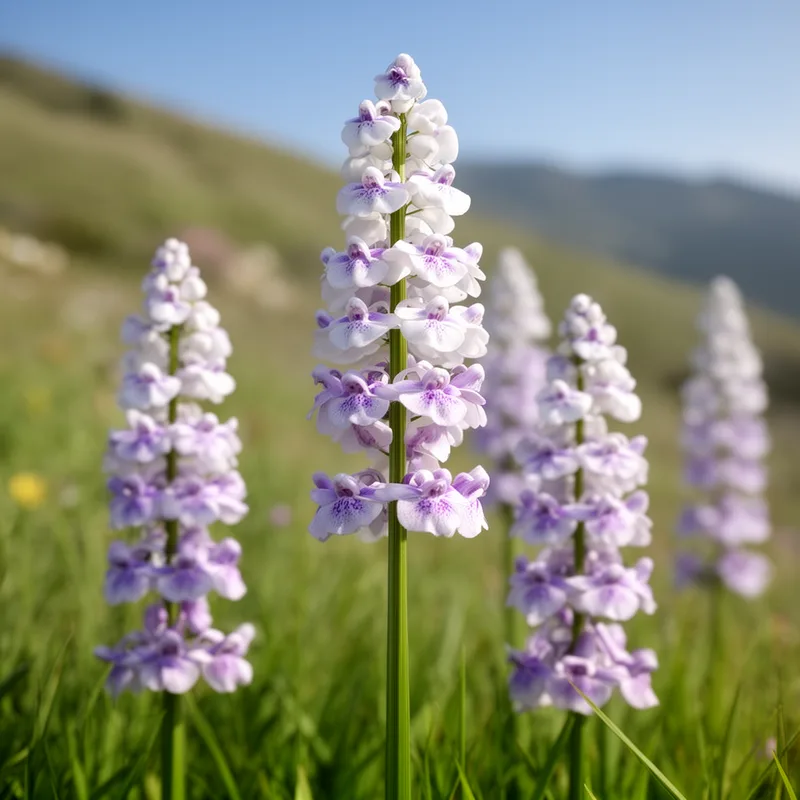
purple Chinese houses
- noun
- US
- Purple Chinese houses bloom in the spring across hillsides in California.
Examples
-
While hiking, we spotted several clusters of purple Chinese houses along the trail.
-
Gardeners appreciate the unique architecture of purple Chinese houses in their native plant gardens.
-
Look at those purple Chinese houses!
-
Wow, purple Chinese houses are beautiful!
-
Purple Chinese houses bloom in the spring, filling the air with their sweet fragrance.
-
During our nature hike, we admired the stunning clusters of purple Chinese houses by the trail.
-
The garden was vibrant with the lovely lavender blooms of purple Chinese houses swaying in the breeze.
Synonyms

A California wildflower with rings of white or light blue flowers around its stem like a small tower

A small wildflower from California with rings of blue or white flowers along its stem

A small wildflower from California with white, pale blue, or lavender flowers that grow in rings around the stem
Surface Forms
Morphology
The phrase components ('purple' + 'Chinese' + 'houses') transparently describe color and an architectural resemblance, so a learner could infer something that looks like purple Chinese-style houses; however they would not reliably deduce that the referent is a plant rather than literal buildings. Because the constituents cue appearance but not the lexical class or idiomatic naming as a plant, the expression is only partially predictable to a B1 learner without prior exposure.
Etymology
Purple Chinese houses comes from the way the plant's flowers grow in stacked rings up the stem, so they look like rows of tiny, roofed buildings and are often pale purple; people imagined little Chinese houses, and that picture became the plant's common name.

