
pupillary
 1
7.5
1
7.5

- adjective
- /ˈpjuːpɪˌlɛri/
- Specialized
- The pupillary light reflexes are still intact... ...and, as yet, there's no optic atrophy.
- afferent pupillary
- pupillary defect
Examples
-
Pupillary reactions to light should be documented, and fundoscopy should be checked for papilloedema.
Academic text (2011) -
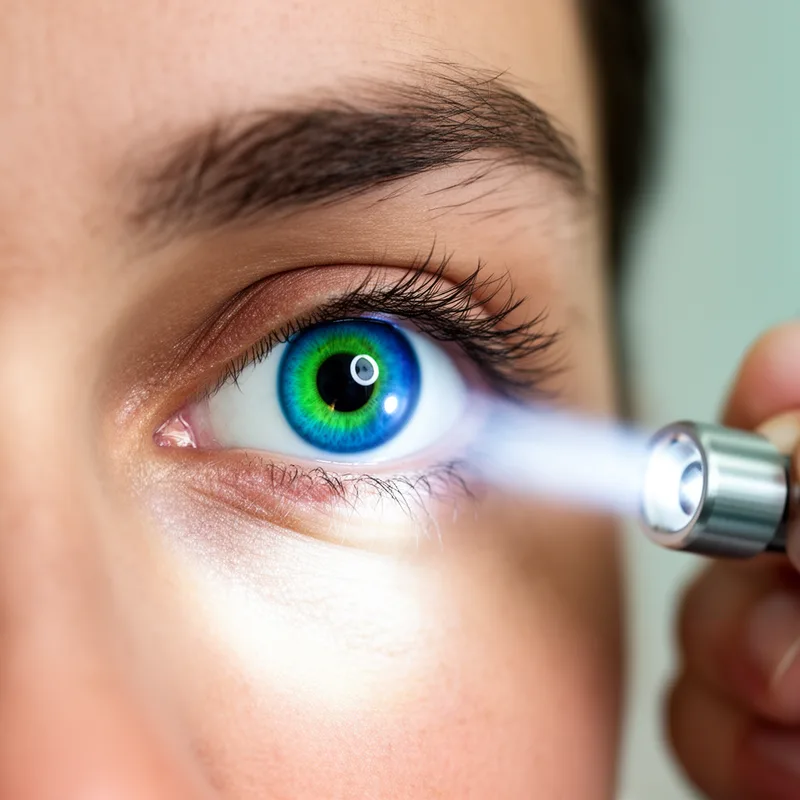
During the examination, the nurse noted that the pupillary reflex was slow to respond to light.
-
Now we can check the pupillary reflexes.
-
Are there pupillary effects from the tranquilizer?
Fiction book (1993) -
You have no pupillary response, no reflexes, your temperature is 70 degrees.
-
Pupillary response normal.
-
Pupillary reflex is good.
-
The doctor assessed the pupillary response to ensure the patient's brain function was normal.
-
Changes in the pupillary size can indicate a variety of medical conditions.
Compounds

- Specialized
An automatic narrowing of the pupil in bright light or after some medicines

- Specialized
A ring of muscle in the coloured part of the eye that makes the pupil smaller
Surface Forms
Morphology
Etymology
The word pupillary comes from the Latin word pupilla, which means 'little doll' because people once saw a tiny reflection like a doll when they looked into the eye. So pupillary is about the pupil, the small dark circle in the eye, and refers to anything affecting that part.