
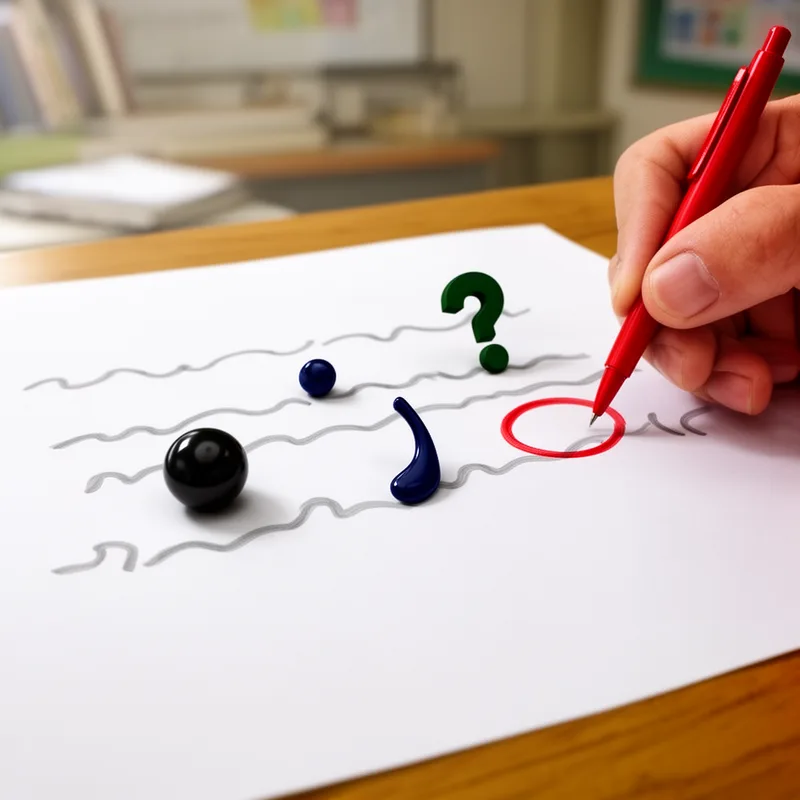
punctuation mark
 1
1.3
1
1.3

- noun
- /ˌpʌŋk.tʃuˈeɪ.ʃən mɑrk/
- Are there weaknesses in spelling, sentence structure, use of punctuation marks, and/or grammar?
- correct punctuation mark
- sequence and punctuation marks
Loading YouTube…
Watch on YouTubeThere's no punctuation mark at the end of your story.
- There's no punctuation mark at the end of your story.
Examples
-
There's no punctuation mark at the end of your story.
-
OK, which punctuation mark ends an imperative sentence?
-
Only those punctuation marks that were correctly applied were counted.
Academic text (2002) -
The sentences are also a little choppy; combine a few with some punctuation marks to make the piece flow more.
Blog text (30) -
Simple sentences need only one ending punctuation mark (e.g., "He ran.").
Academic text (2002) -
Correct punctuation marks and words in complete sentences are also promising metrics and require replication.
Academic text (2002) -
In her essay, she used a punctuation mark as a crucial tool to separate different ideas.
-
Understanding the role of each punctuation mark is essential for clear writing.
-
The question mark is a common punctuation mark that indicates a question is being asked.
Synonyms

 1
5.9
1
5.9
A character or symbol that separates items in text and data files
Surface Forms
Morphology
The meaning is directly and transparently derivable from the constituents: 'punctuation' (marks that clarify meaning in writing) combined with 'mark' (a symbol) simply names a type of symbol used in writing. This is a straightforward, compositional phrase common across languages, so a B1 learner who knows both words will readily understand it.
Etymology
The noun punctuation mark comes from the idea of a small mark or point put in writing to show where to 'stop' or 'pause' when reading. That's why a punctuation mark like a period, comma, or question mark shows the ends of sentences and where to pause.