
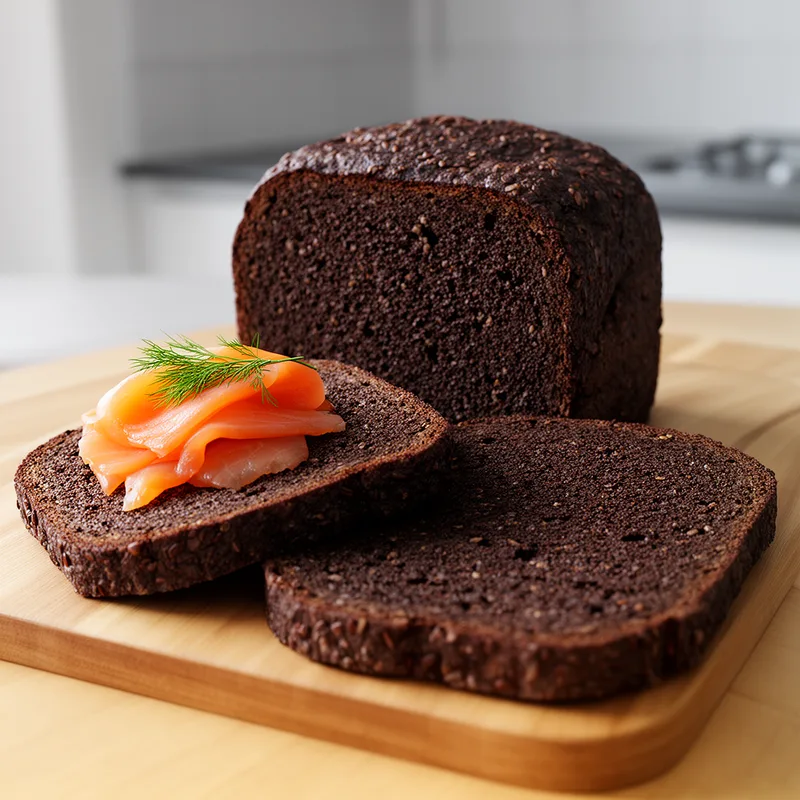
pumpernickel
 6
7.4
6
7.4

- noun
- /ˈpʌmpərˌnɪkəl/
- I love the rich, earthy flavor of pumpernickel with cream cheese.
- pumpernickel bread
- pumpernickel bagel
- pumpernickel sandwich
Loading YouTube…
Watch on YouTubeI knew You Were Trouble when you brought your bread round pumpernickel.
- I knew You Were Trouble when you brought your bread round pumpernickel.
Examples
-
On Sunday nights, at Uncle Bill's, Aunt Rose's, or Uncle Eddie's, someone goes to the bakery and brings back sacks of onion rolls and pumpernickel bread.
Fiction book (1991) -
We didn't have much food, but I found a few slices of stale pumpernickel, a jar of peanut butter, and honey.
Fiction book (1990) -
Get a bite of this pumpernickel bread.
-
A hard, real sandwich, no pumpernickel here.
Blog text (6) -
The pumpernickel bread testifies to no cultural decline.
Academic text (2001) -
I'm sure it goes great with, uh, tomato and mayonnaise and pumpernickel.
-
Bacon, lettuce, and tomato with mayonnaise on pumpernickel toast.
-
It's a personal favorite of my family, best eaten with extra sharp cheddar cheese, Miracle Whip or mayonnaise, and wheat or pumpernickel bread.
Blog text (1) -
Pumpernickel bread is perfect for making hearty sandwiches.
-
We enjoyed slices of pumpernickel with our soup for lunch.
Synonyms
 4
2.2
4
2.2
Bread made with rye flour that is darker and denser than wheat bread
 1
2.9
1
2.9
A dark, dense bread made from rye flour

 1
2.7
1
2.7
A loaf made from whole wheat or other dark flours
How Dense

Surface Forms
Etymology
The word pumpernickel comes from German and a popular story says it joins pumper 'to break wind' and nickel 'goblin', so it was a joking name for a heavy rye bread that could make your stomach rumble. That's why today pumpernickel means a dark, dense rye bread.