
puckerbush
- noun
- US
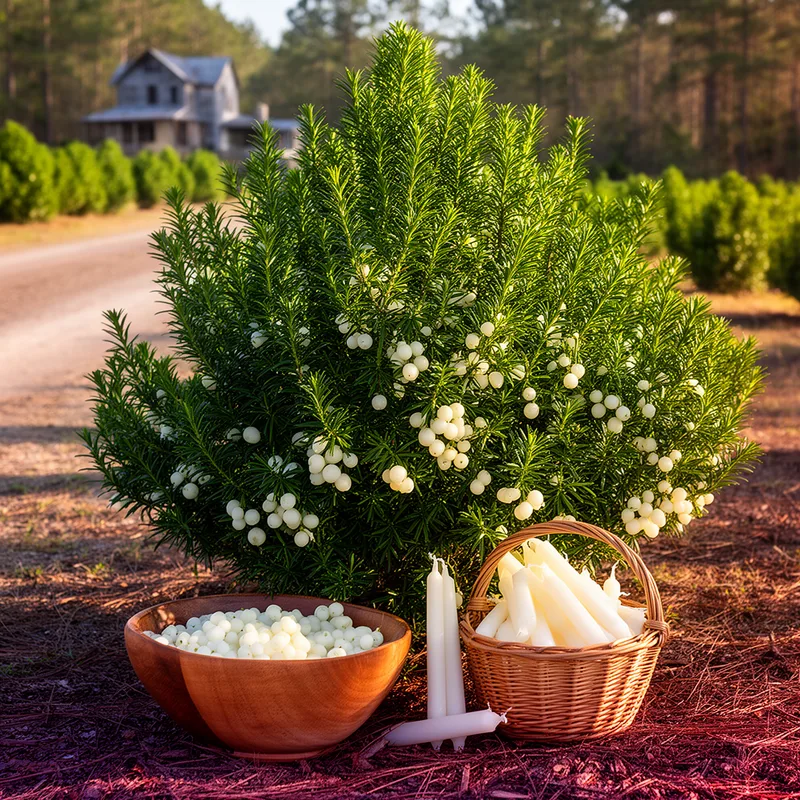
- Early settlers collected berries from the puckerbush to make candles for their homes.
Examples
-
The distinctive aroma of puckerbush trees filled the southern woodland air.
-
The old farm was bordered by a dense line of puckerbush along the road.
-
The puckerbush thrives in the warm climate of Florida.
-
Many gardeners appreciate the puckerbush for its aromatic leaves.
-
Early settlers collected berries from the puckerbush to make candles for their homes.
-
Many gardeners appreciate the puckerbush for its aromatic leaves and attractive waxy berries.
-
The old farm was bordered by puckerbush, which provided both beauty and natural candle-making materials.
Synonyms


 1
7.9
1
7.9
A shrub or small tree with fragrant leaves and small berries with a shiny covering

An evergreen shrub or small tree with waxy white berries used to make candles

An evergreen shrub or small tree with a strong smell and berries covered in white wax used to make candles
Surface Forms
Morphology
Etymology
Puckerbush probably comes from its two simple parts: pucker (because the sour or strong berries make you 'pucker' or 'tighten your lips') and bush ('a small tree or shrub'). That's why the name fits this evergreen shrub with hard waxy berries and a strong smell, whose fruit was used long ago for making candles.