
publicum
- noun
- /ˈpʌblɪkəm/
- Archaic
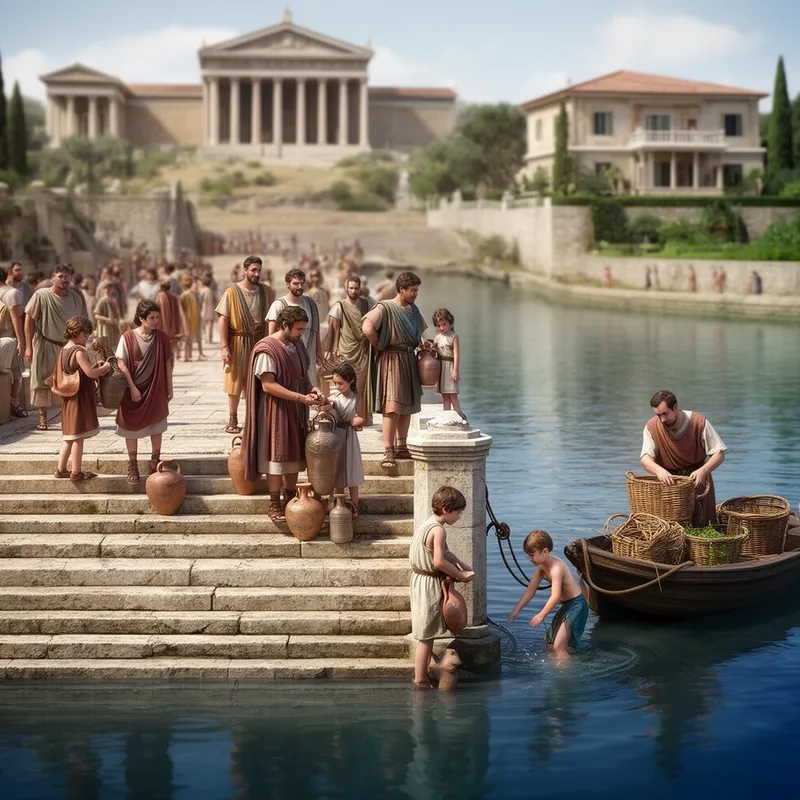
- On the other hand, jus publicum allowed the government to hold certain common properties, such as rivers, the seashore, and the air, for public use.
- jus publicum
- publicum and jus regium
Examples
-
Another Roman property classification important to the development of the Public Trust doctrine, res communes, reinforced jus publicum by declaring some property "common to all."
Academic text (2001) -
(N211) Lord Hale introduced the concept of jus publicum, the idea that no one, not even the Crown, could destroy or alienate certain public rights in property.
Academic text (2001) -
Even the grant of land subject to a jus privatum tide was still conditioned on jus publicum concerns.
Academic text (2001) -
The English continued the jus regium and jus publicum doctrines proposed by Justinian in their common law.
Academic text (2001) -
Roman law also organized additional property classifications under separate categories, with two classifications key to the relationship between the police power and the Public Trust doctrine: jus regium and jus publicum.
Academic text (2001) -
Besides recognizing res communes classifications, English law acknowledged jus regium and jus publicum.
Academic text (2001) -
Moreover, the sovereign cannot alienate either jus publicum or jus regium, especially because the public's interest is such an intrinsic element.
Academic text (2001) -
The principle of publicum asserts that certain natural resources are preserved for the benefit of all citizens.
-
In legal discussions, publicum often relates to property rights that belong collectively to the state.
-
The concept of publicum is crucial in environmental law, as it protects areas deemed essential for public enjoyment.
Synonyms

 14
2.8
14
2.8

Property owned by the government that people can use
Surface Forms
Etymology
Publicum comes from the Latin publicus, which means 'of the people', and is related to populus 'people'. In ancient Rome it named land or goods owned by the state or for everyone, so today we use 'public' for property or services that belong to the community.