

public nuisance
 4
5.7
4
5.7

- noun
- /ˈpʌblɪk ˈnjuːsəns/
- Formal
- That outhouse is a public nuisance!
- a public nuisance action
- constitutes a public nuisance
- abate public nuisance
Examples
-
The government need not compensate proprietors for prohibiting uses of property that amount to public nuisances.
Academic text (1990) -
The city council took action against the abandoned building, as it was considered a public nuisance that attracted vandalism.
-
The woman is a public nuisance.
-
The only thing they could do to him was close his place down as a public nuisance.
-
Whitehouse is the only attorney general to bring a public nuisance action on behalf of his state.
Academic text (2002) -
Cases of public nuisances arising from the odor of this material have been reported.
Academic text (1999) -
This petition is all we need to get Ruby's house declared a public nuisance.
-
Municipalities could hold the owner liable for maintaining a public nuisance.
Academic text (1994) -
Residents near the noisy nightclub filed a complaint, arguing that it was a public nuisance affecting their quality of life.
-
The overgrown lawn and abandoned car on the property led neighbors to label it a public nuisance requiring city intervention.
Synonyms
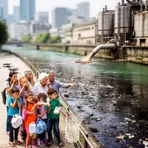
A problem that unfairly harms something everyone in a community has the right to use
How Disruptive

Surface Forms
Morphology
The phrase is directly compositional: 'nuisance' (a harmful or annoying condition) combined with 'public' (affecting the general population) yields the meaning of a nuisance that impacts the community or public rights. While it has a specific legal formulation, the core sense is predictable from the constituents and would be recognizable to a B1 learner who knows both words.
Etymology
Public nuisance comes from a clear image: something that harms or annoys the whole community, with public meaning the people and nuisance meaning a 'bother' or 'trouble'. So a public nuisance is something that unfairly harms or badly bothers many people.