

psychomotor


 1
7.3
1
7.3
- adjective
- /ˌsaɪkoʊˈmoʊtər/
- Specialized
- Psychomotor activities, such as dancing or sports, connect mental focus with physical movement.
- psychomotor development
- psychomotor skills
- psychomotor ability
Examples
-
Music educators should also be aware of the cognitive and psychomotor development of children in order to properly sequence learning objectives.
Academic text (1991) -
Psychomotor performance data can provide evidence to discern whether students are progressing toward planned objectives.
Academic text (2001) -
For that reason, only cognitive and psychomotor behaviors are considered under the concept of productivity in this article.
Academic text (1992) -
As a result, reported student benefits encompassed more than just the typical fitness and psychomotor benefits.
Academic text (2010) -
Carefully planned in the integrated curriculum, psychomotor learning can become a successful component of the foundation for lifelong learning.
Academic text (1993) -
Students must develop a variety of important cognitive and psychomotor skills that mutually illuminate their understanding.
Academic text (1996) -
Four measures were utilized to assess affective and psychomotor development.
Academic text (2007) -
The purpose of this study was to implement and evaluate a curricular model designed to enhance sociomoral and psychomotor development in physical education.
Academic text (2007) -
The outputs of the educational system are realized in cognitive, affective, and psychomotor domains.
Academic text (1992) -
The therapist designed exercises to improve the patient's psychomotor skills and coordination.
Compounds
- Archaic
1
7.8
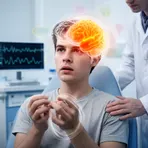
A brain condition that causes brief loss of awareness, memory gaps, and automatic movements or strange sensations

Surface Forms
Morphology
Etymology
Psychomotor comes from two parts: psycho-, a part that means 'mind' as in psychology, and motor, which means 'move' like a car motor. So psychomotor means the connection between the mind and physical movement.