
psychometric
 3
7.8
3
7.8

- adjective
- /ˌsaɪkoʊˈmɛtrɪk/
- Specialized
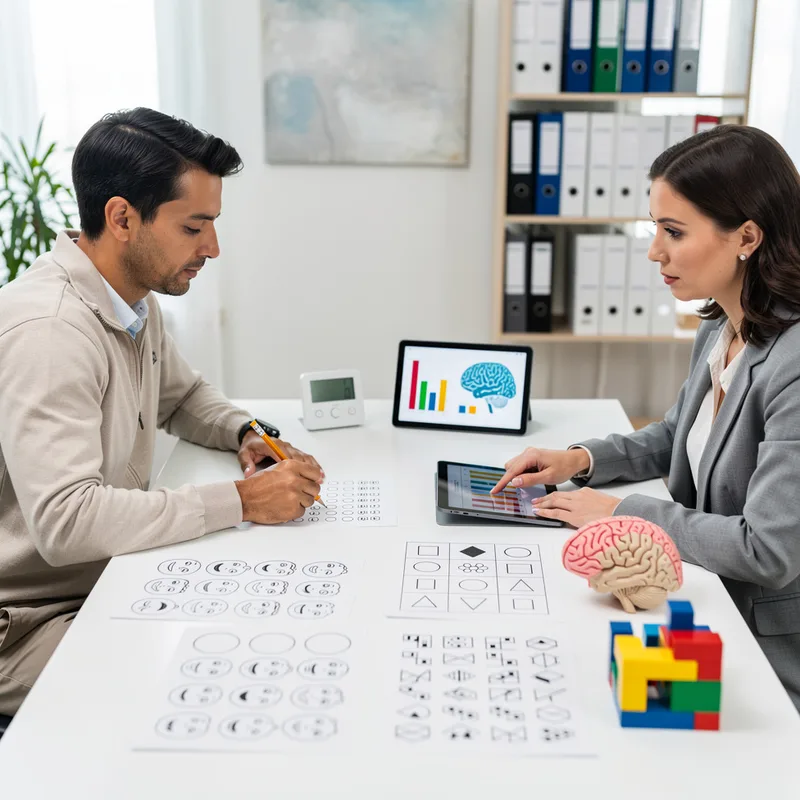
- Psychologists use psychometric tests to assess a person's cognitive abilities and personality traits.
- psychometric test
- psychometric property
- psychometric information
Loading YouTube…
Watch on YouTubeAnd, and as unlikely as it sounds, we actually have good psychometric measures of those experiences.
- And, and as unlikely as it sounds, we actually have good psychometric measures of those experiences.
Examples
-
All of these measures meet rigorous psychometric standards for reliability and validity.
Academic text (2008) -
Although these traditional psychometric criteria are necessary, they are insufficient evidence that a measure models growth.
Academic text (1999) -
And, and as unlikely as it sounds, we actually have good psychometric measures of those experiences.
-
Mean scores for the various psychometric measures for each group are shown in Table 1.
Academic text (1992) -
The first was to further explore the psychometric properties of the Preferred Thinking Styles in Teaching Inventory.
Academic text (2011) -
The potential technical adequacy of the psychometric measures appears to be very high.
Academic text (1990) -
Several questions remain with regard to the psychometric properties of the DPRS.
Academic text (1990) -
Future researchers may want to consider assessing the psychometric properties of scores for this revised scale.
Academic text (2008) -
The STRS is a widely used research instrument for which sufficient to good psychometric properties have been reported.
Academic text (2008) -
Descriptive statistics, internal consistency coefficients, and correlations between the psychometric variables are displayed in Table 3.
Academic text (2008)
Antonyms

Compounds

Surface Forms
Morphology
Etymology
Psychometric comes from the Greek roots psyche meaning 'mind' and metron meaning 'measure', like in psychology and the familiar meter that measures things. So, psychometric means 'measuring the mind', which is why it describes tests that check mental ability and personality.