
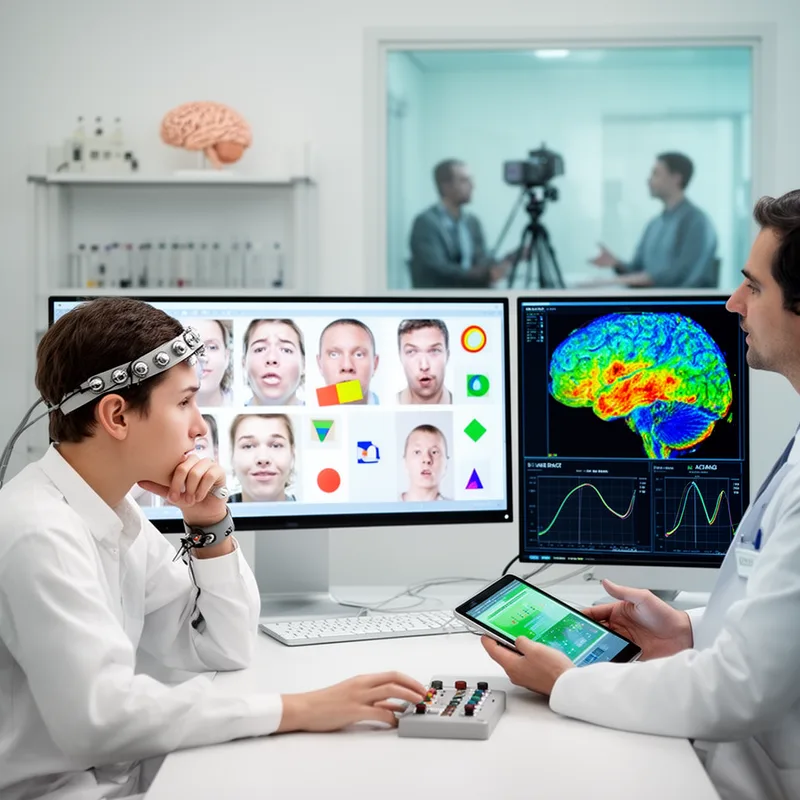
psychological science


 1
4.1
1
4.1
- noun
- /ˌsaɪkəˈlɒdʒɪkəl ˈsaɪəns/
- Specialized
- The first quarter of the 20th century was also an era when compulsory education was gaining strength and psychological science was gaining respect.
Loading YouTube…
Watch on YouTubeSo my point is this is all based on psychological science.
- So my point is this is all based on psychological science.
Examples
-
Courses in the school psychology core help students relate the theories and methods emphasized in the psychological sciences core to the populations, settings, problems, and service delivery models that define the specialty of school psychology.
Academic text (1991) -
We go beyond merely making recommendations for practice based on principles of psychological science, and instead detail specific interventions we employ to promote conceptual change in our classrooms.
Academic text (2015) -
Psychological Science is one of the top 10 psychology journals in the world.
Blog text (27) -
Psychological science is a field in which students apply the scientific method and the tools of induction and deduction to examine behavior.
Academic text (2010) -
All students complete coursework in basic psychological sciences, as well as a specified curriculum in school psychology.
Academic text (1991) -
Until advances in psychological science result in reliable methods for evaluating specific claims of domestic violence, experts should limit their opinions accordingly.
Academic text (2016) -
The basic psychological sciences core includes courses in normal and abnormal development, the history of psychology, and the biological basis of behavior.
Academic text (1991) -
The research conducted in psychological science helps to unravel the mysteries of human behavior and thought processes.
-
Many findings in psychological science provide valuable insights into effective treatment methods for mental health disorders.
-
Understanding the impact of social interactions on mental well-being is a key focus area in psychological science.
Synonyms
 286
4.3
286
4.3
The study of people's thoughts, feelings, and behavior
 41
8.1
41
8.1
The study of the mind and how people think and behave
Surface Forms
Morphology
The meaning is directly compositional: 'psychological' (relating to psychology/mental processes) modifies 'science' (systematic study), so a learner who knows both words can infer it refers to the scientific study of mental processes and behavior. This regular adjective + noun combination is a common, cross-linguistic pattern and does not involve idiomatic or metaphorical shift, making it immediately comprehensible to B1 learners.
Etymology
Psychological science comes from two old Greek words: psyche meaning 'mind' and logos meaning 'study'. It gives a picture of a science that looks closely at thoughts, feelings and behavior, so today it means 'the scientific study of mental processes and behavior'.