
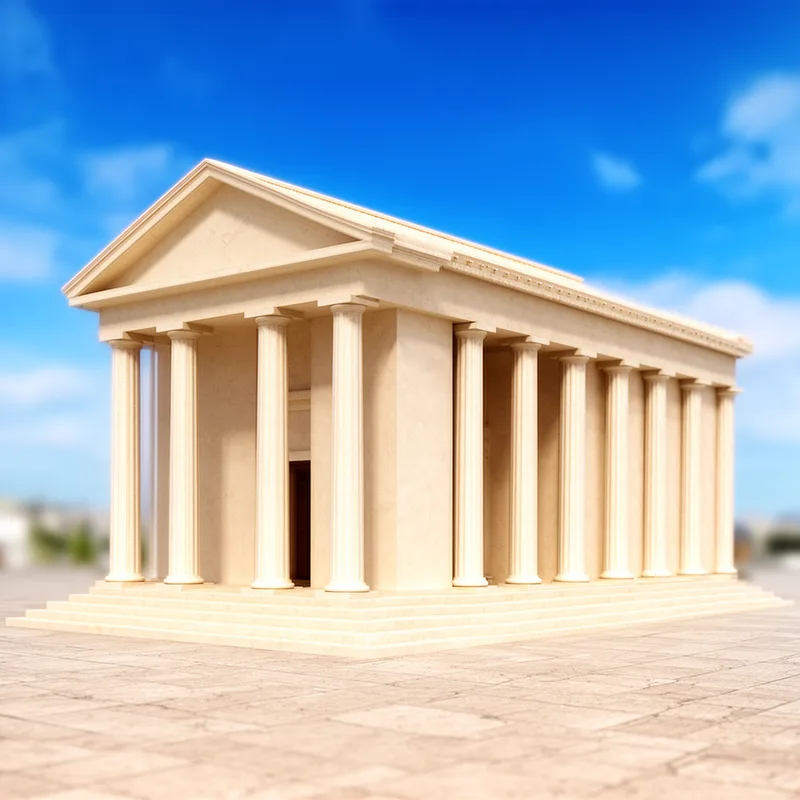
pseudoperipteral
- adjective
- /ˌsuːdoʊpəˈrɪptərəl/
- Specialized
- The Roman temple is considered pseudoperipteral because its side columns are embedded in the cella walls.
Examples
-
Architects admired the pseudoperipteral design for its harmonious façade and illusion of a colonnade.
-
Many ancient Roman structures are pseudoperipteral.
-
A pseudoperipteral plan blends aesthetic appeal with practical structural support in classical buildings.
-
The temple was designed in a pseudoperipteral style.
-
The Roman temple is considered pseudoperipteral because its side columns are embedded in the cella walls.
-
Architects admired the pseudoperipteral design for its harmonious façade and illusion of a colonnade.
-
A pseudoperipteral plan blends aesthetic appeal with practical structural support in classical buildings.
Synonyms



 1
8.1
A building or walkway that has a row of columns along its side
Antonyms
Surface Forms
Morphology
pseudoperipteral = peripteral (semi-transparent) = pseudo + peripter + al
The prefix pseudo- clearly signals 'appearing to be' or 'false', but the base word peripteral is a technical architectural term that many learners will not know.
Etymology
The word pseudoperipteral comes from Greek parts pseudo- meaning 'false' and peri- meaning 'around', the same 'peri-' you see in perimeter ('edge around'). So a pseudoperipteral building looks like it has a ring of columns all around, but some of those columns are 'false' because they are built into the walls instead of standing free.