
provirus
- noun
- /ˈproʊˌvaɪrəs/
- Specialized
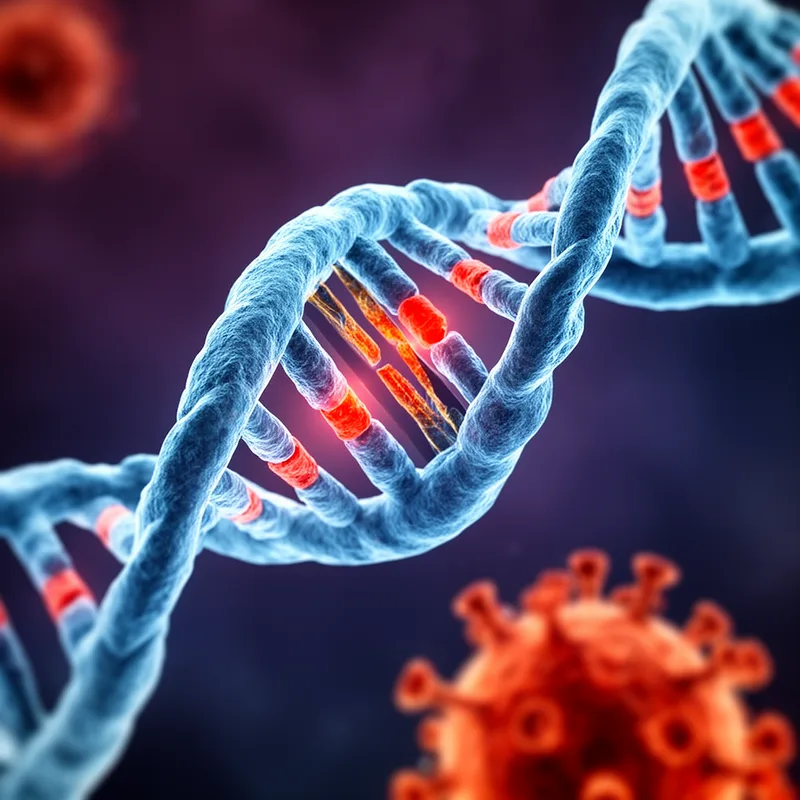
- Once integrated with the host's genetic material, the DNA version of the retroviral RNA is called a provirus.
- HIV provirus
Examples
-
And then this integrated provirus then serves as a template for making progeny plus stranded RNA.
-
Although the patient would acquire bone-marrow cells with defective provirus in their genomes, the reproduction of a complete retrovirus or its transmission to the next generation of people would be impossible.
Academic text (2005) -
The provirus now uses host resources to copy the DNA back into RNA molecules.
Academic text (2005) -
Baltimore's idea is that an intentionally damaged or incomplete HIV provirus might be engineered to produce receptor-blocking proteins without doing anything else to affect the host cell.
Academic text (2005) -
The virus that gave rise to such a provirus could serve as a vaccine: like a dog in a manger, it would occupy a cell it could not use, but it would still keep out other viruses—in particular, undamaged, lethal HIV.
Academic text (2005) -
Once integrated with the host's genetic material, the DNA version of the retroviral RNA is called a provirus.
-
The provirus in the infected cell replicates along with the host DNA, enabling the virus to persist.
-
Researchers studied how the provirus remains dormant within the host's genome for long periods.
Surface Forms
Morphology
Etymology
Provirus comes from the prefix pro- meaning 'before', as in prologue the part before a story, and virus meaning 'virus'. A provirus is a virus 'in waiting' inside a cell's DNA before it becomes active, which is why it is the hidden viral genetic material.

