
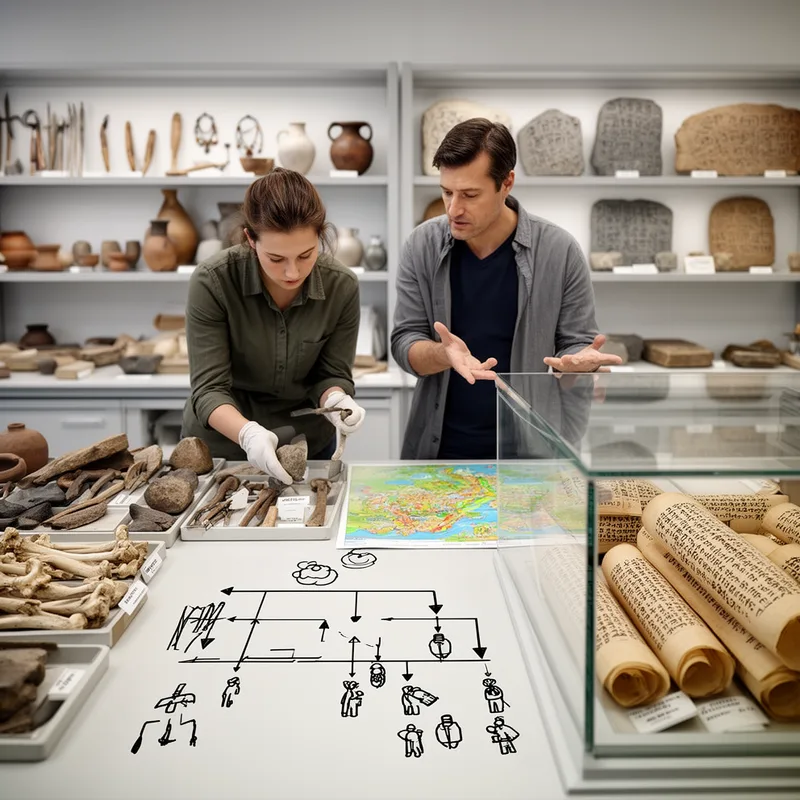
protohistory
- noun
- /ˌproʊtəʊˈhɪstəri/
- Specialized
- Experts in protohistory analyze the remains of early communities to reconstruct their social structures.
Examples
-
However, since the criterion dividing regional prehistory from regional protohistory is the presence or absence of European trade goods, such assertions have the potential for tautology.
Academic text (1992) -
This was one of the primary indigenous trade networks across which the earliest European trade goods were to move during early protohistory.
Academic text (1992) -
Archaeologists are uncovering artifacts that shed light on the protohistory of ancient civilizations.
-
The study of protohistory helps us understand human interactions in eras without written records.
Synonyms
The study of people and groups before writing existed
A study of very old human tools, bones, and how people lived before writing
Surface Forms
Morphology
Etymology
The word protohistory comes from proto- meaning 'first' and history meaning 'a record or story of the past'. So, protohistory is the 'first' part of history — the time just before regular written records, studied from objects and from accounts by nearby people who could write.

