
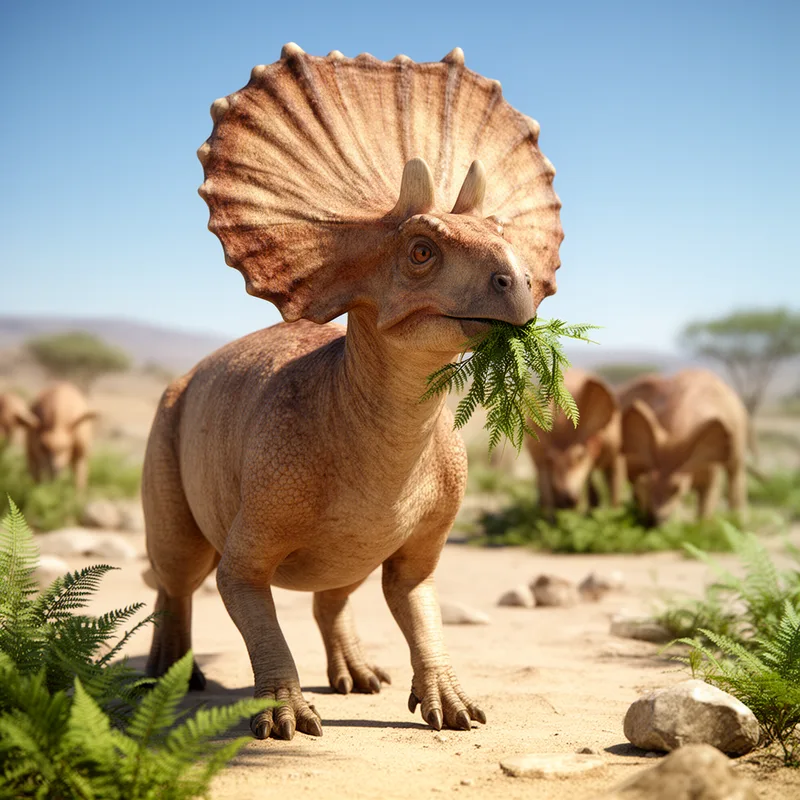
protoceratops


 1
9.9
- noun
- /ˌproʊtəˈsɛrətɒps/
- Specialized
- The discovery of a protoceratops fossil shed light on dinosaur parental behavior.
Examples
-
Scientists believe that protoceratops lived in herds for protection from predators.
-
Children at the museum were fascinated by the skull of a protoceratops.
-
The protoceratops was a small, herbivorous dinosaur.
-
Many protoceratopses lived in herds for protection.
-
Children at the museum were fascinated by the skull of a protoceratops.
-
Scientists believe that protoceratops lived in herds for protection from predators.
-
The discovery of a protoceratops fossil shed light on dinosaur parental behavior.
Synonyms
 318
3.0
A large extinct animal from long ago, like T. rex
 1
9.9
A four-legged plant-eating dinosaur with a large beak, horns, and a bony frill on the head

A group of plant-eating dinosaurs with large bony frills and horns on their faces, like Triceratops
Surface Forms
Morphology
protoceratops = ceratops (opaque) = proto + cerat + ops
The word is a classical scientific formation built on a taxonomic base, so most learners will not be able to infer its meaning from the base word.
Etymology
Protoceratops comes from Greek parts proto- 'first' and ceratops 'horned face', so it means 'first horned face'. That's a simple image to remember: it was a small, early plant-eating dinosaur with a horned head and a large frill at the back of its skull, which is why the name fits.