
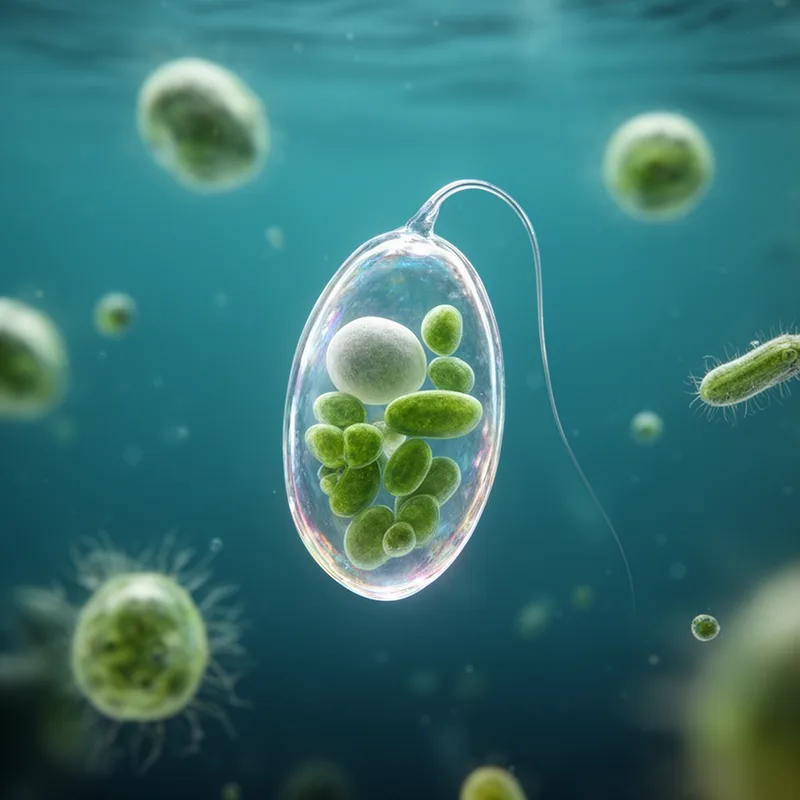
protistan
- noun
- /prəˈtɪstən/
- Specialized
- As that epizootic waned in the mid-1970s, Bonamia ostreae, another protistan parasite, increased to epizootic proportions and further reduced populations of O. edulis.
Examples
-
Beginning in 1968, the protistan parasite Marteilia refringens affected oyster growing areas.
Academic text (1992) -
A common example of a protistan is the amoeba, which can live independently in water.
-
Some protistans, like diatoms, play a crucial role in aquatic ecosystems by producing oxygen.
-
Researchers study protistans to understand their diverse ways of obtaining nutrients and reproducing.
Synonyms
 1
8.6
1
8.6

A living thing usually made of one cell with a nucleus that is not an animal, plant, or fungus
Small living things made of one cell or a few cells, like algae, often found in water
Surface Forms
Morphology
Etymology
Protistan comes from the group name Protista, built on the Greek root proto- meaning 'first'. Think of prototype to remember it: protistan refers to those 'first' or simple life forms, often single-celled organisms.