
proteome
 1
9.9

- noun
- /ˈproʊtiˌoʊm/
- Specialized
- In the whole proteome dataset, angiotensinogen and renin were both detected, but were not significantly different between HF and controls.
- human proteome
- proteome project
- proteome analysis
Examples
-
Nowadays it's a huge field of proteomics where people can read off whole proteomes and from cells they can read all the proteins that are in there.
-
The prospect of a human proteome project is held back by a fundamental problem.
-
The proteome is larger than the genome, especially in eukaryotes, in the sense that there are more proteins than genes.
Academic text (2010) -
We do not know if the removal of volume overload would revert changes in the renal proteome.
Academic text (2018) -
To comprehensively map the renal proteome and to identify HF-induced changes in protein expression, we used quadruplex iTRAQ labeling.
Academic text (2018) -
Attempts have been made to characterize the RNA and proteome contents of exosomes produced by hepatocyte cell lines (HKCI-C3, HKCI-8, MHCC97L, and MIHA).
Academic text (2017) -
The proteome of the human heart has been mapped for the first time.
-
A finer appreciation of the differences between the proteomes of individuals will allow doctors to tailor treatments to specific populations.
Surface Forms
Morphology
proteome = protein (semi-transparent) = prote + ome
Formed by combining the protein stem (truncated to 'prote-') with the technical suffix '-ome' (as in genome), so the relation to 'protein' is clear but the specialized suffix and stem truncation make it less immediately guessable for general learners.
Etymology
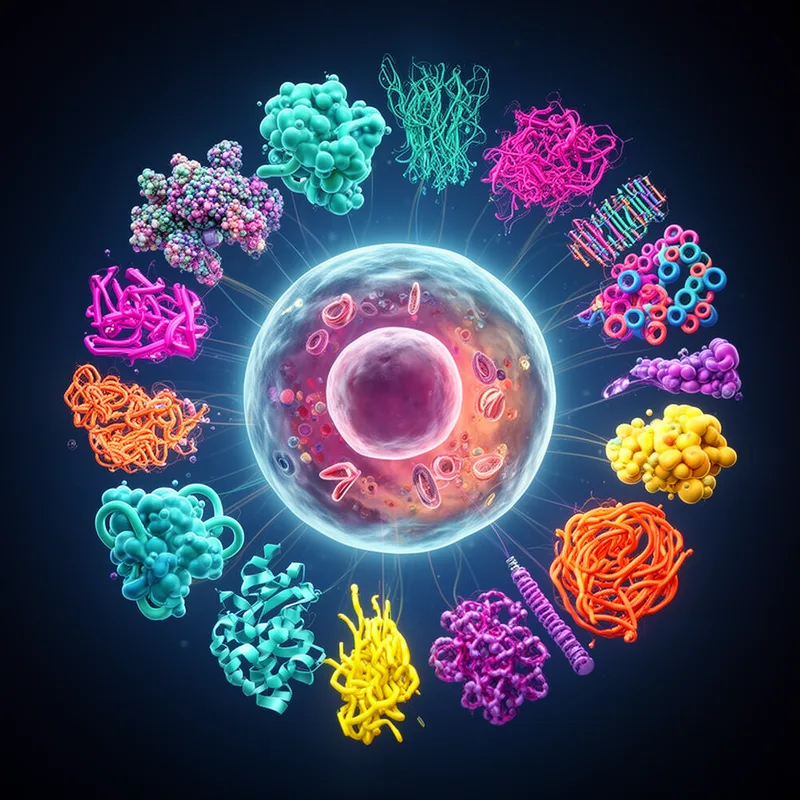
Proteome comes from protein and the ending -ome, which means 'a whole set', like in genome or biome. That's why a proteome is the complete set of proteins made by an organism, cell, or tissue at a certain time.