
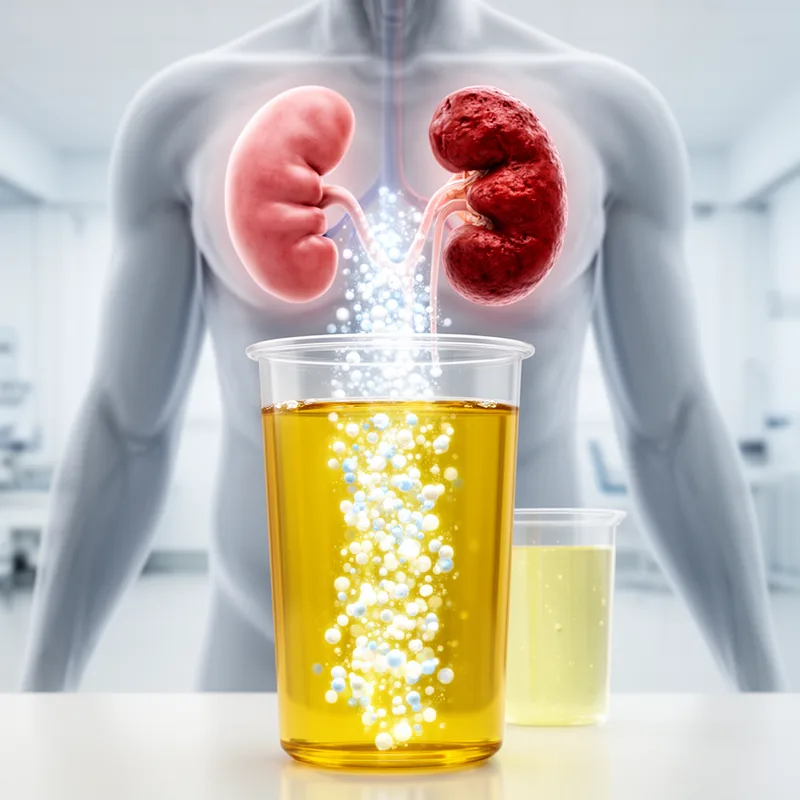
proteinuria


 1
9.9
- noun
- /ˌproʊtiˈniʊriə/
- Specialized
- The doctor explained that proteinuria could indicate underlying kidney disease.
- anemia and proteinuria
Examples
-
In addition to CKD, anemia and CHF contribute the most to the overall cost of care, followed by proteinuria and coronary artery disease.
Academic text (2007) -
The other two comorbid conditions, anemia and proteinuria, were identified from the laboratory results database.
Academic text (2007) -
Not only did we find a substantial impact of proteinuria across all levels of GFR, that impact appeared greatest in patients with better kidney function.
Academic text (2007) -
To test this, we plotted GFR against cost for those with and without proteinuria.
Academic text (2007) -
Serum electrolytes were normal, as was the urine, except for slight proteinuria.
Academic text (1998) -
Massive proteinuria, hematuria, and urinary casts were present.
Academic text (2007) -
There is a clear increase in cost for those with proteinuria across all levels of GFR, but it is less pronounced in more severe renal disease.
Academic text (2007) -
Proteinuria persisted, and the patient at this time is receiving monthly cyclophosphamide therapy and prednisolone.
Academic text (2007) -
Renal biopsy was performed when oliguria, heavy proteinuria, or hematuria persisted for three weeks.
Academic text (2012) -
Current NKF/KDOQI staging guidelines require proteinuria to be present for defining stage 2 (GFR 60-89) but not stage 3 (GFR 30-59).
Academic text (2007)
Synonyms
 1
9.9
A high amount of protein in the urine that often shows a kidney problem
Surface Forms
Morphology
Etymology
Proteinuria is made of protein and -uria, where -uria means 'urine'. So proteinuria means 'protein in the urine', which is why the word describes when urine has too much protein and often shows a problem with the kidneys.