
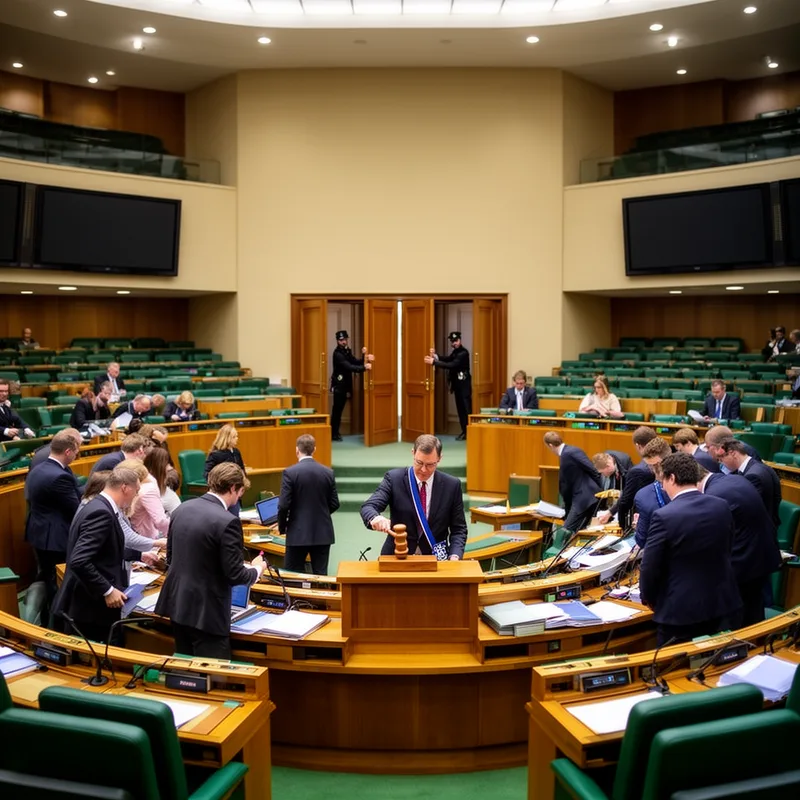
prorogation


 1
9.9
- noun
- /ˌprɔrəˈɡeɪʃən/
- UK
- A session of Parliament, having been formally opened, continues until a "prorogation" brings about its conclusion.
Examples
-
The Prime Minister has said that the prorogation of Parliament was nothing to do with Brexit.
-
Prorogation is generally achieved by a proclamation of the Governor General, again issued on the advice of the Prime Minister.
Blog text (31) -
Elected governments have requested prorogation in the past and received it, without incident and without triggering new elections.
Blog text (31) -
In normal working, prorogation is just the precondition to dissolution, which ends one parliament.
Blog text (31) -
The prorogation of the legislative session allowed the members to focus on their upcoming elections.
-
After the prorogation of Parliament, all discussions were postponed until the next session began.
-
The government announced a prorogation, indicating that no further business would occur until next month.
Synonyms
 15
4.8
To stop a meeting, court, or session for a short time
Surface Forms
Morphology
Etymology
Prorogation comes from Latin parts pro- ('forward') and rogare ('to ask'). Long ago, officials would 'ask' to move a meeting forward, so prorogation means the formal pause or delay of a parliament or assembly until a later date.