

propionic
- adjective
- /prəˈpɪənɪk/
- Specialized
 :
propiónico
:
propiónico
- Researchers discovered that increasing the concentration of propionic acid can help inhibit bacterial growth.
- propionic acid
Examples
-
"Other scientists have shown that volatile fatty acids such as propionic acid don't kill salmonella in a chicken, but they do inhibit its growth," Corrier points out.
Academic text (1994) -
"We found that 80 percent of the time, we can link increased propionic acid in 10-day-old birds with control of salmonella growth."
Academic text (1994) -
In-vivo inversion from R to S enantiomers is also known for fenoprofen (n13) and benoxaprofen, and is likely to occur for many (n1), but not all, of this propionic acid series.
Academic text (1991) -
Propionic acid is commonly found in aged cheeses due to the activity of certain bacteria.
-
The flavor of Swiss cheese is enhanced by the presence of propionic acid produced during fermentation.
Synonyms
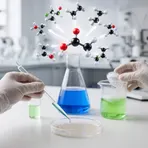
Relating to chemicals made from propionic acid
Compounds

- Specialized
A sharp smelling liquid found in milk and sweat used to stop mold and make other chemicals
Surface Forms
Morphology
propionic = propionic acid (opaque) = propion + ic
The term 'propionic' is derived from 'propionic acid', which is not a transparent derivation for learners unfamiliar with chemical terminology.
Etymology
Propionic comes from the name propionic acid, a small three-carbon acid — think of the prop- part like in propane, which also has three carbons. So propionic means 'from or like propionic acid', which is why we use it for acids made by certain bacteria in cheese and the gut.

