
prograde
- adjective
- /ˈproʊɡreɪd/
- Specialized
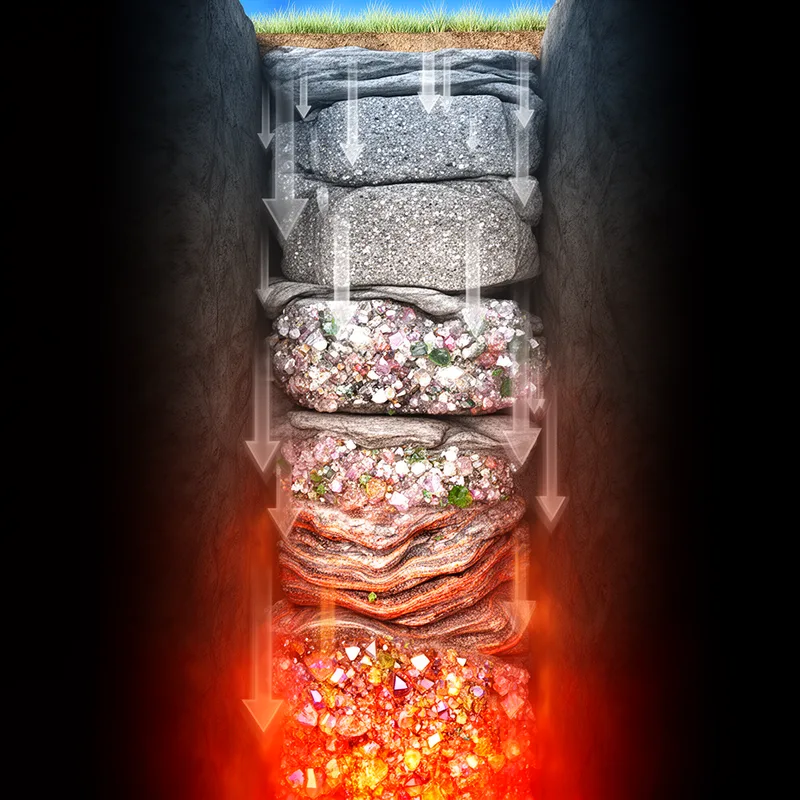
- During prograde changes, rocks are buried deeper and exposed to higher temperatures.
Examples
-
During prograde metamorphism, minerals change their structure.
-
The prograde metamorphism of the rock resulted in the formation of new minerals.
-
Scientists studied the prograde sequence to understand the region's geological history.
-
The prograde metamorphism of the rock was evident.
-
During prograde changes, the increasing pressure and heat altered the minerals within the rock.
-
Geologists identified the prograde metamorphic processes that contributed to the rock's transformation over time.
-
The prograde development of the rock layers showed how they responded to heat and pressure during burial.
Antonyms



Surface Forms
Morphology
Etymology
Prograde comes from the parts pro- 'forward' and grad 'step', the same root found in grade and graduate. So when rocks change as they are buried and see more heat and pressure, they are taking 'forward steps' through higher conditions, which is why geologists call those changes 'prograde'.