

proboscidean


 1
9.9
- noun
- /prəˈbɑsɪdiən/
- Specialized
- Many proboscideans, including modern elephants, are known for their complex social structures and intelligence.
Examples
-
One of the major ones is how the bones of a human and a proboscidean, an order of mammals that includes extinct species such as mastodons, mammoths, and gomphotheres, wound up at the bottom of Hoyo Negro together.
Academic text (2011) -
Or was Hoyo Negro simply a dangerous watering hole that once lured a proboscidean and a human to their deaths?
Academic text (2011) -
The museum display included a life-sized model of a proboscidean, showcasing its long trunk and large tusks.
-
Scientists discovered fossils of a proboscidean that lived millions of years ago, revealing much about its diet and habitat.
Synonyms
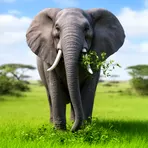
A large plant-eating animal like an elephant with a long trunk and tusks
Surface Forms
Morphology
proboscidean = Proboscidea (semi-transparent) = proboscis + ean
Derived from the scientific name Proboscidea (referring to animals with a proboscis); the link to 'proboscis' (trunk) is meaningful but requires specialized or biological knowledge.
Etymology
Proboscidean comes from the Greek word proboscis, which means 'long nose' and gives us the English word proboscis. So, a proboscidean is an animal with a long 'trunk' or 'nose', like an elephant.