
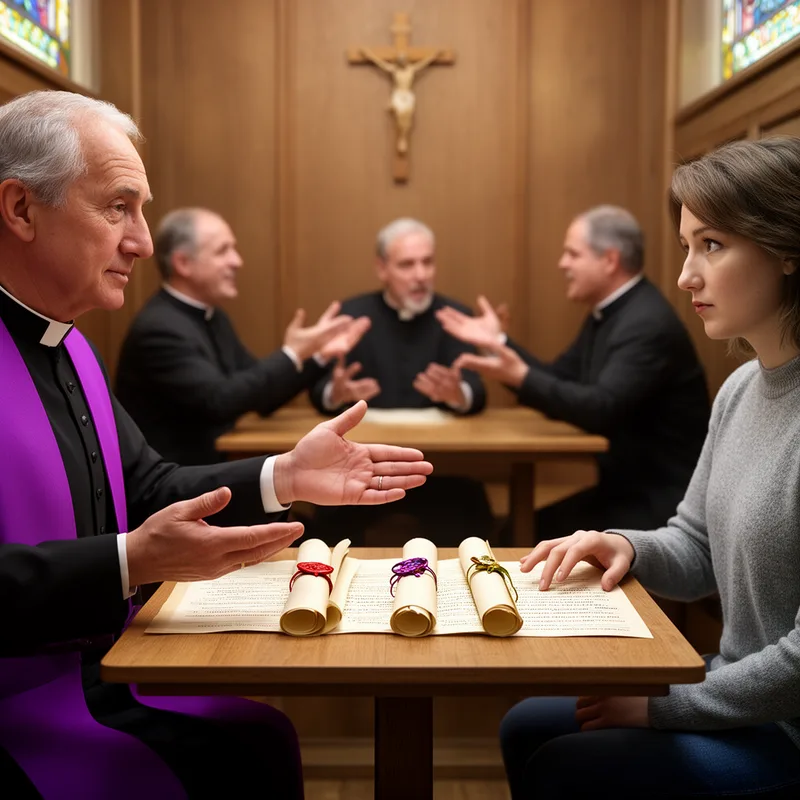
probabilism
- noun
- /ˌprɒbəˈbɪlɪzəm/
- Specialized
 :
probabilismo
:
probabilismo
- This is where the history of, and controversies over, moral Probabilism may still have something to offer contemporary ethics.
Examples
-
-- (n16) Julia Fleming, Defending Probabilism: The Moral Theology of Juan Caramuel (Washington: Georgetown University, 2006).
Academic text (2009) -
The concept of probabilism allows individuals to make ethical decisions based on opinions that have solid backing without requiring absolute certainty.
-
Catholic theologians debate the merits of probabilism in situations where conflicting moral opinions exist.
-
Many modern ethicists reference probabilism when discussing how to navigate complex moral dilemmas.
Surface Forms
Morphology
Etymology
Probabilism comes from the common word probable ('likely' or 'provable') plus the ending -ism ('system' or 'doctrine'). In Catholic moral teaching it named the rule that you may follow any reputable opinion that has good 'probability' even if another seems more likely, so the word means following what is 'likely' enough when there is no certainty.

