
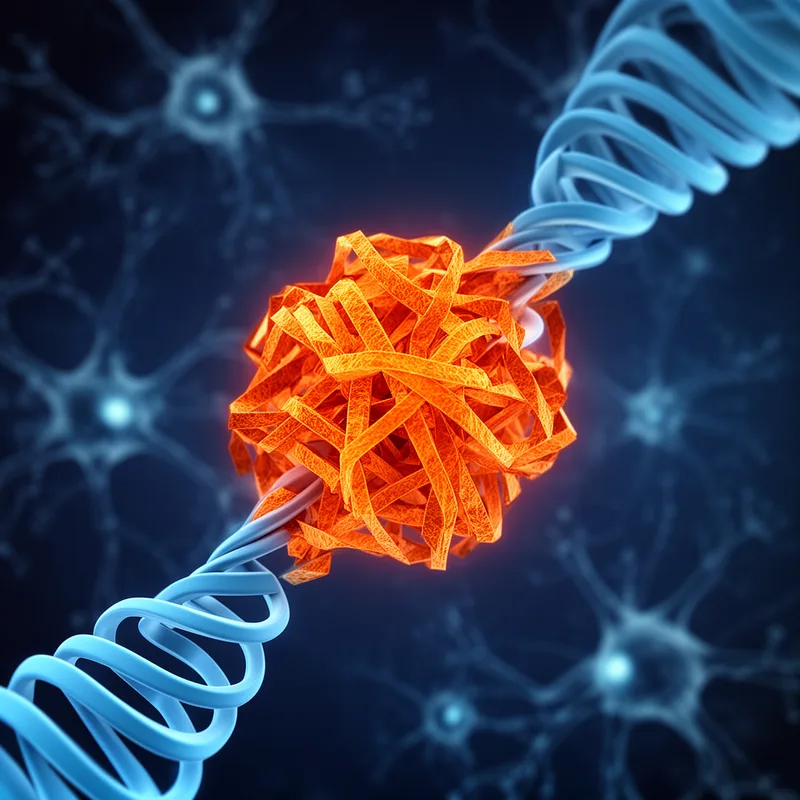
prion
 6
9.9

- noun
- /ˈpriːɒn/
- Specialized
- So these are all collectively designated as prion diseases.
- prion protein
- prion disease
- prion infectivity
Loading YouTube…
Watch on YouTubeIt's a really crazy disease caused by prions which are terrifying.
- It's a really crazy disease caused by prions which are terrifying.
- These smaller particles are often called prions.
- If you eat the flesh of a cow that has been eaten by one of those prion, by those prions, it will eat you.
Examples
-
In the new test, a red color indicates that scrapie prions are present in the sample.
Academic text (1998) -
BSE is transmitted to cows through feed containing animal parts from prion-infected cows.
Academic text (2004) -
Discovery of these prion traits has altered the accepted scientific ground rules for what can cause disease.
Academic text (2004) -
A test for the presence of prions in animal feed is problematic.
Academic text (2004) -
However, infectivity in urine from naturally prion-affected animals has never been reported.
Academic text (2012) -
Now the difference between all disorder, neurodegenerative diseases and the prion disorders is that prion disorders are infectious.
-
Such a sensitive test would help diagnose animals with abnormal prions before they start showing clinical symptoms.
Academic text (2004) -
Transmissible spongiform encephalopathies, also known as prion diseases, are fatal neurodegenerative disorders that affect humans and animals.
Academic text (2012) -
A new monoclonal antibody test can detect telltale prions in lymphoid tissue taken from a sheep's third eyelid.
Academic text (1998) -
Certain neurodegenerative conditions, known as prion diseases, are caused by infectious proteins that can replicate in the brain.
Surface Forms
Etymology
Prion was invented from the common word protein plus the ending -on, and it comes from the phrase 'proteinaceous infectious particle'. So a prion is an infectious particle made of protein rather than of genes or DNA, which helps explain why it is different from a virus.