

to print over
- phrasal verb
- /prɪnt ˈoʊvər/
- Specialized
- The designer decided to print over the original invitation with the correct date.
Examples
-
The error was fixed by printing over the old price with the new one.
-
Sometimes printers print over existing labels to update information without replacing the whole material.
-
Don't print over the existing design!
-
Please print over the faded images!
-
The artist decided to print over the previous design to add more vibrant colors.
-
We had to print over the initial draft to include the latest revisions.
-
To fix the mistake, she had to print over the old numbers with the correct ones.
Synonyms


 1
8.0
1
8.0
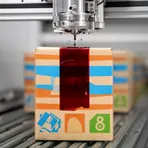
To print extra text or images on something already printed

To print a new letter or symbol directly on top of an existing one
Surface Forms
Morphology
The meaning 'to print additional text or colors onto an already printed surface' is directly derivable from combining 'print' (to produce text/images) with 'over' (indicating on top of or above). The construction follows a common English pattern where 'over' conveys placement on top or covering, so a B1 learner who knows both words would readily infer this sense; similar 'over/onto' strategies exist in other languages, supporting transparency.
Etymology
Print over comes from the simple action of putting new ink on top of old ink — the parts print and over show the idea of printing extra text or color on what is already there. So the phrase means 'to print additional text or colors onto an already printed surface'.