
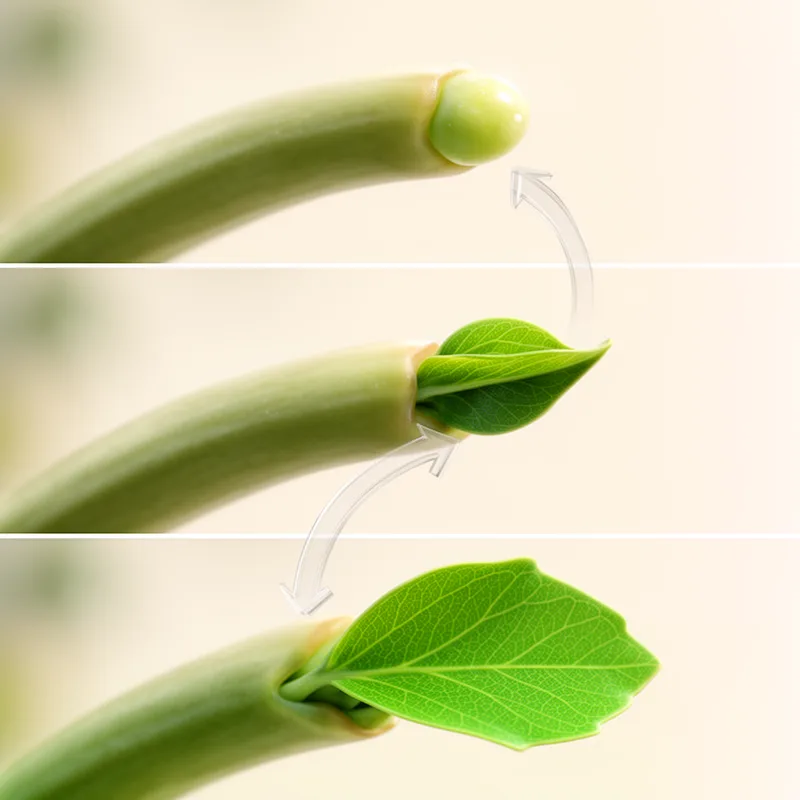
primordium


 1
9.9
- noun
- /praɪˈmɔrdɪəm/
- Specialized
- The primordium of the limb bud is essential for the proper formation of the arm and hand.
- parotid primordium
- horn primordium
Examples
-
The facio-acoustic primordium appears during the third week of life.
Academic text (2003) -
At this stage of development, expression can be observed in the greater distal area of the developing horn primordium.
Academic text (2005) -
Note the intense, mushroom-like folding of the horn primordium.
Academic text (2005) -
Right: Sagittal section through the thoracic horn primordium in Onthophagus nigriventris.
Academic text (2005) -
By 32 mm (eighth week), third-order ductules are present, and the primordium has entered the parotid space.
Academic text (2003) -
The temporal, zygomatic, and upper buccal branches are superficial on the parotid primordium.
Academic text (2003) -
At this time, the buccal, marginal mandibular, and cervical nerve branches approach the parotid primordium.
Academic text (2003) -
We have the somite seal, the notochord, the endoderm, the ectoderm, and two primordia of the dorsal ERTA.
-
In addition, by 26 mm the embryo develops first-order ductules of the parotid primordium, which lies next to the masseter muscle, and several branches of the facial nerve course superficial to it.
Academic text (2003) -
During embryonic development, the primordium of the heart forms early to lay the groundwork for further growth.
Synonyms
 1
5.4
Tissue in an embryo that develops into organs
 1
9.9
An early part in an embryo that later becomes an organ
Antonyms


How Developed
394
2.6

- Specialized
1
9.9
Surface Forms
Etymology
Primordium comes from Latin words primus 'first' and ordiri 'to begin', and it is like the English word primary. So a primordium is the tiny first form or 'start' of an organ or tissue that later grows into the full organ.