
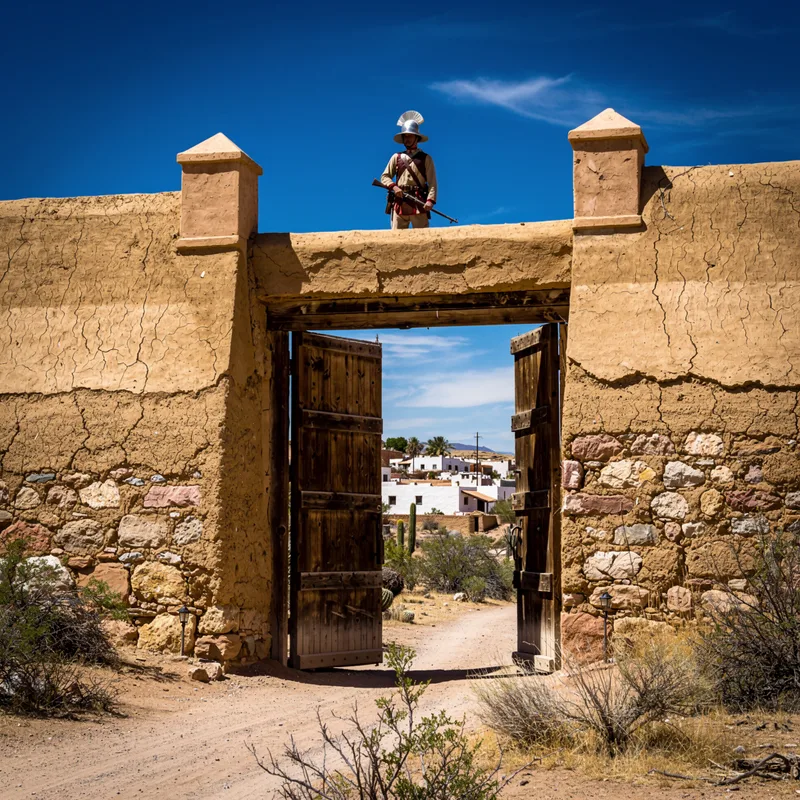
presidio
 6
9.9

- noun
- /prɛˈsɪdiˌoʊ/
- US
- The remains of the old Presidio can still be seen in the southwestern landscape of Texas.
Examples
-
During our visit, we explored the historic Presidio that served as a military outpost in the past.
-
The soldiers were garrisoned in a far corner of the mission until a permanent presidio could be built on a nearby hill.
Fiction book (1995) -
Because of the restrictions on raiding, Spaniards delivered food and provisions for compensation (Moorhead, Presidio 1975, 261).
Academic text (1996) -
"Spanish soldiers built the walled presidio of San Agustin de Tucson during the 1770s and '80s as protection from attacking Apaches.
Academic text (1996) -
The Presidio was established by the Spanish to protect their settlements from potential threats.
Synonyms
 257
2.3
A strong building where soldiers live to defend an area
 113
4.4
A large strong building or group of buildings to protect people from attack
 20
3.7
A base or group of buildings where soldiers live and work
 19
7.7
A strong fortress near a city where people shelter during war
 1
7.0
A place that soldiers defend strongly to stop enemy attacks
Surface Forms
Etymology
Presidio comes from Spanish and from the Latin praesidium, meaning 'a group of soldiers' or 'protection'. It is the same root as preside and president, and a presidio was a military fort or outpost set up to 'protect' towns and missions, which is why it means a fortress today.