

preposition
 11
1.0
11
1.0

- noun
- /ˌprɛpəˈzɪʃən/
- Specialized
- In the sentence 'The cat is on the mat,' the word 'on' is a preposition that shows location.
- target prepositions
- locative prepositions
- preposition with verbs
Loading YouTube…
Watch on YouTubeAnd then he would say, don't you know, you're not supposed to follow a question with a preposition?
- And then he would say, don't you know, you're not supposed to follow a question with a preposition?
- And then some some repetitions of the the preposition by to sort of signal how you might activate that.
Examples
-
The assessment identified three prepositions that were unknown to all participants: above, beneath, and behind.
Academic text (2015) -
School librarians' favorite preposition is for, as in evidence for practice.
Academic text (2015) -
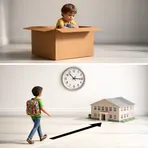
"Preposition" is a word that indicates location.
-
All students maintained their use of and responses to the three target prepositions for eight weeks after instruction ended.
Academic text (2015) -
Students who were unable to expressively use or respond to prepositions were chosen to participate in this study.
Academic text (2015) -
Being able to comprehend and use locative prepositions allows individuals to develop these necessary skills.
Academic text (2015) -
The students' receptive responses to prepositions were measured separately from students' expressive use of prepositions on each probe.
Academic text (2015) -
When learning a new language, it's important to understand how to use prepositions correctly.
-
The teacher explained that a preposition can indicate time, such as in the phrase 'before dinner.'
Compounds

- Specialized
More than one word that work together to show place, time, or other connection like in front of

- Specialized
A noun or pronoun that comes after a preposition to complete its meaning
Surface Forms
Morphology
Etymology
Preposition comes from the parts pre- 'before' and a root like pon/pose meaning 'to place', the same idea you see in position. So a preposition is a small word put 'before' a noun to show place, time, or direction.