
prehensile
 3
8.2
3
8.2

- adjective
- /prɪˈhɛnsaɪl/
- Specialized
- Within squamates, iguanians have prehensile tongues for capturing prey, an ancestral feature lost in scleroglossans.
- prehensile tail
Examples
-
The possum is North America's only animal with a prehensile or grasping tail.
-
The tail is prehensile and so strong that seahorses often cannot be pried loose from a holdfast.
Academic text (1990) -
Kevin had prehensile toes, meaning that his toes were about as long as fingers.
Blog text (26) -
The Kinkajou wraps its prehensile tail around her neck.
Fiction book (1993) -
Like its savanna relative, the okapi browses by twining its long, prehensile tongue around branches, stripping off the leaves, and pulling them into its mouth.
Academic text (1992) -
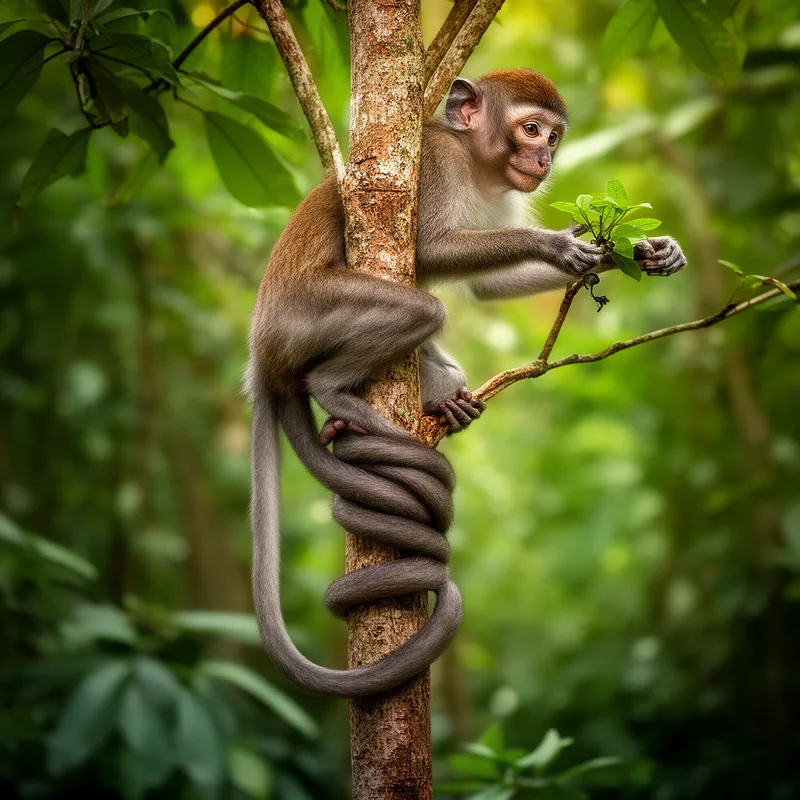
Seahorses have prehensile tails that curl and grab like a monkey's.
-
The Kinkajou wraps its prehensile tail around her neck.
Antonyms


How Prehensile

Surface Forms
Morphology
prehensile = prehens + ile
The combining form 'prehens-' is not a standalone English morpheme and is not transparent to an average B1 learner, so the meaning 'capable of grasping' cannot be reliably derived from familiar English parts.
Etymology
The word prehensile comes from the Latin root prehend- meaning 'to grasp', the same root as in comprehend ('to grasp' an idea). So a prehensile tail or foot is made to wrap around and hold things.