
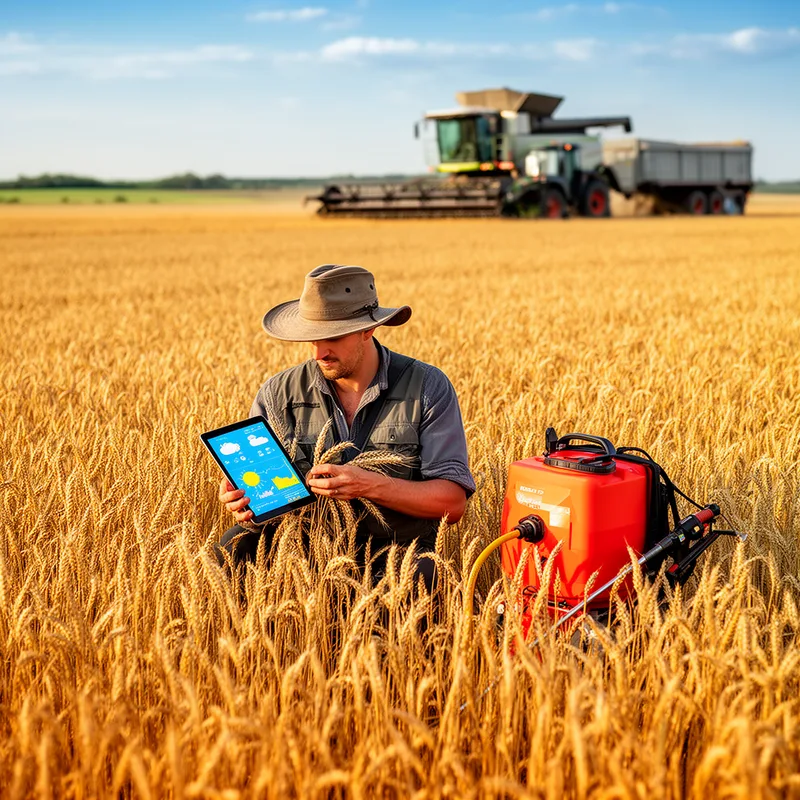
preharvest
- adjective
- /priːˈhɑːrvɛst/
- Specialized
- Farmers often apply fertilizer as a preharvest measure to maximize crop yield.
Examples
-
Implementing pest control is crucial during the preharvest phase to protect the crops.
-
The preharvest preparation included testing soil samples for nutrient levels.
-
Several companies are interested in pursuing bacteriophages as a preharvest intervention strategy.
Academic text (2006) -
The most likely reason is that the predominant preharvest condition was mature or old-growth forest (Table 2).
Academic text (1996) -
ARS scientists are investigating a variety of approaches to reducing consumer risk of Salmonella infection transmitted through foods of animal origin, including preharvest strategies.
Academic text (2006) -
Preharvest yield tests in the test plot, as well as in the production field, indicated stand yields of 155 to 160 bushels per acre.
Academic text (1996) -
Besides creating air-quality problems that will directly affect the human population in these cities (Godoi et al. 2004), this preharvest burning very often reaches native forest fragments located nearby or in the middle of plantations, as the senior author of this paper has observed every year since 1980.
Academic text (2006) -
Preharvest burning of sugarcane is related to increased levels of carbon monoxide and ozone in the agricultural regions and cities where sugarcane is produced (Kirchoff 1991).
Academic text (2006)
Surface Forms
Morphology
Etymology
Preharvest combines pre- meaning 'before' and harvest meaning 'gathering crops'. So, preharvest describes something that happens before the crops are gathered.

