

prefrontal lobotomy


 1
9.9
1
9.9
- noun
- /ˌpriːˈfrʌntəl ləˈbɒtəmi/
- Archaic
- Despite its controversial history, the prefrontal lobotomy was once considered a viable option for patients suffering from debilitating psychiatric disorders.
Examples
-
And he introduced what's now called frontal lobotomies or prefrontal lobotomies as a treatment for severe psychiatric disorders.
-
In the mid-20th century, many patients underwent prefrontal lobotomy to treat severe mental illnesses, often with drastic effects on their personalities.
-
After receiving a prefrontal lobotomy, she experienced significant changes in her behavior and cognitive abilities.
Synonyms
 26
9.9
26
9.9
An operation that cuts nerves in the front brain to treat mental illness, often changing personality and thinking
 24
4.1
24
4.1
An operation on the brain to treat illness or injury
 1
9.9
1
9.9
A surgery that cuts connections in the front of the brain through the eye socket
 1
9.9
1
9.9
An operation that cuts connections in the front part of the brain and often changes thinking and personality
 1
9.9
1
9.9
A surgery that cuts the connections from the brain's frontal lobe, often causing big changes in personality and thinking
 1
9.6
1
9.6
An operation on the brain to treat very serious mental problems when other treatments fail
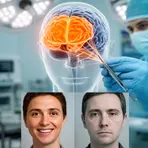
A brain surgery that cuts connections in the front part of the brain and often changes personality
Surface Forms
Morphology
The compound is transparently built from 'prefrontal' (relating to the front part of the frontal cortex) and 'lobotomy' (surgical severing of brain pathways), so the overall meaning — a lobotomy performed on the prefrontal area — is directly derivable from the parts. This is a literal, domain-specific compound that follows standard medical composition patterns and has clear parallels in other languages, making it understandable to learners who know the constituent words.
Etymology
Prefrontal lobotomy literally describes an operation: prefrontal is the 'front part' of the brain and lobotomy means 'cutting a lobe'. Because doctors cut those connections, people often had big changes in thinking and personality, which is why the term refers to that operation and its effects.