

prefix notation
- noun
- /ˈpriːfɪks noʊˈteɪʃən/
- Specialized
- In computer science, prefix notation is a method where the operator precedes its operands.
Examples
-
Mathematicians sometimes use prefix notation to avoid parentheses in complex formulas.
-
In computer science, prefix notation is also known as Polish notation.
-
The calculator was set to operate using prefix notation rather than the standard infix method.
-
The expression is written in prefix notation.
-
Can you explain prefix notation to me?
-
Mathematicians sometimes use prefix notation to simplify expressions without parentheses.
-
The calculator was set to use prefix notation instead of the usual infix style.
Synonyms

A way to write math expressions with each operator before its numbers, without parentheses
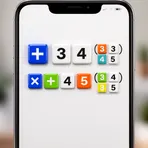
A way of writing math expressions without parentheses where a math sign like + or − comes before the numbers
Surface Forms
Morphology
The meaning is directly compositional: 'prefix' (something attached to the beginning) combined with 'notation' (a way of writing) yields a writing system that places elements at the front. A B1 learner who knows both constituent words can infer that this notation puts operators before other elements (the detailed convention about parentheses is technical but the core idea is transparent).
Etymology
Prefix notation comes from the parts prefix, meaning 'before', and notation, meaning 'a way of writing'. In this system the 'operator' is written before the numbers or 'operands', so you do not need 'parentheses', and that is why the name describes how the expressions are written.

