
preclassic
- adjective
- /priˈklæsɪk/
- Specialized
- They depict the Maya maize god and date to as early as 300 B.C., the earliest known Preclassic Maya art.
- the early Preclassic
Examples
-
Middle and Late Preclassic Maya vessels with stubby spouts may have been used to froth the liquid inside with blown air.
Academic text (2010) -
Early Preclassic cultures are generally thought to have been egalitarian, but Henderson and Joyce believe that cacao parties could also be a sign that some people, those with access to higher-quality polychrome pots, were striving for greater status.
Academic text (2010) -
The channel fill produced mixed lots of mostly Late/Terminal Classic shards, but with a much higher mix of Early Classic and Late Preclassic shards.
Academic text (2002) -
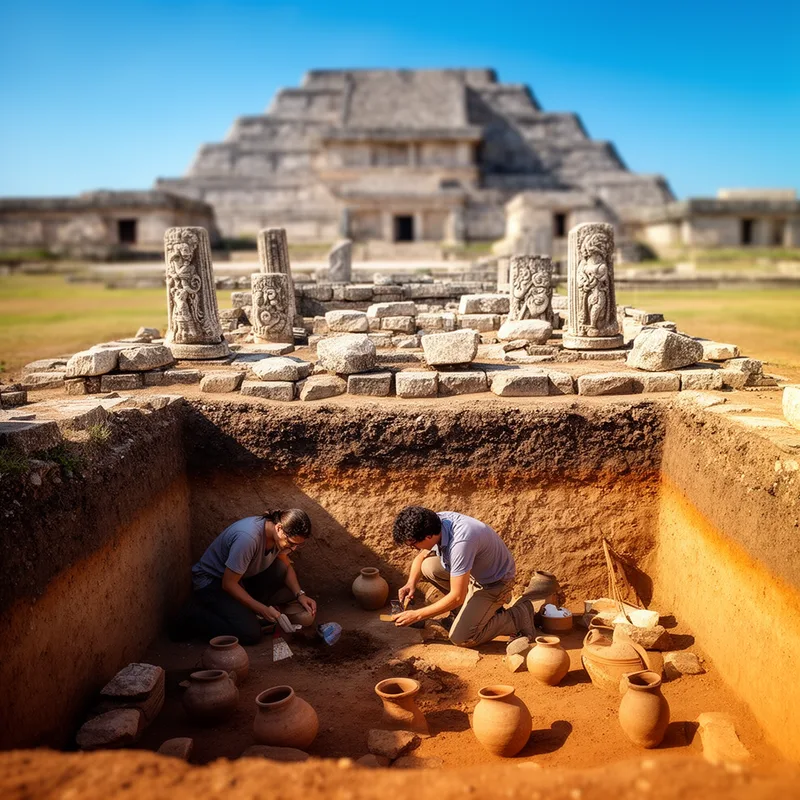
The early civilization is known for its preclassic architectural styles that laid the foundation for future cultures.
-
Researchers study preclassic artifacts to understand the social structures of ancient societies before the classical era.
-
The exhibition showcases preclassic pottery, highlighting the artistic techniques used by artists centuries before the classical period.
Synonyms
Belonging to the time before the classical era in art, music, or literature
Surface Forms
Morphology
Etymology
Preclassic is made of the prefix pre- meaning 'before' and classic, meaning the 'main' or well-known period, like in preview or preheat where pre- also means 'before'. So preclassic describes something from 'before' the classical era of a culture.

