
precapitalist


 1
7.9
- adjective
- /priːˈkæpɪtəlɪst/
- Chaucer and his contemporaries lived in precapitalist market communities where people tended to produce goods for exchange and not just for private use.
- precapitalist era
Examples
-
In precapitalist societies, most goods were produced for local consumption and not for sale in markets.
-
The increasing pace of economic activity on the far northern frontier of the Spanish New World empire began in the precapitalist era.
Academic text (1992) -
The Asante example shows that capitalism does not invariably preserve precapitalist forms in peripheral economies.
Academic text (2005) -
To that degree, they are no longer entrepreneurs or capitalists but relics of the feudal and static societies of the precapitalist era.
Academic text (1991) -
In the precapitalist era, he wrote in a 1922 text, the artist was simply the most qualified of craftsmen, a material inventor and innovator who made things to satisfy the functional demands of byt.
Academic text (1997) -
The union halls were cultural centers where working-class art was exhibited, and as such they were compared to the medieval cathedral, which was the very creation of artisans united in precapitalist, corporative guilds.
Academic text (1992) -
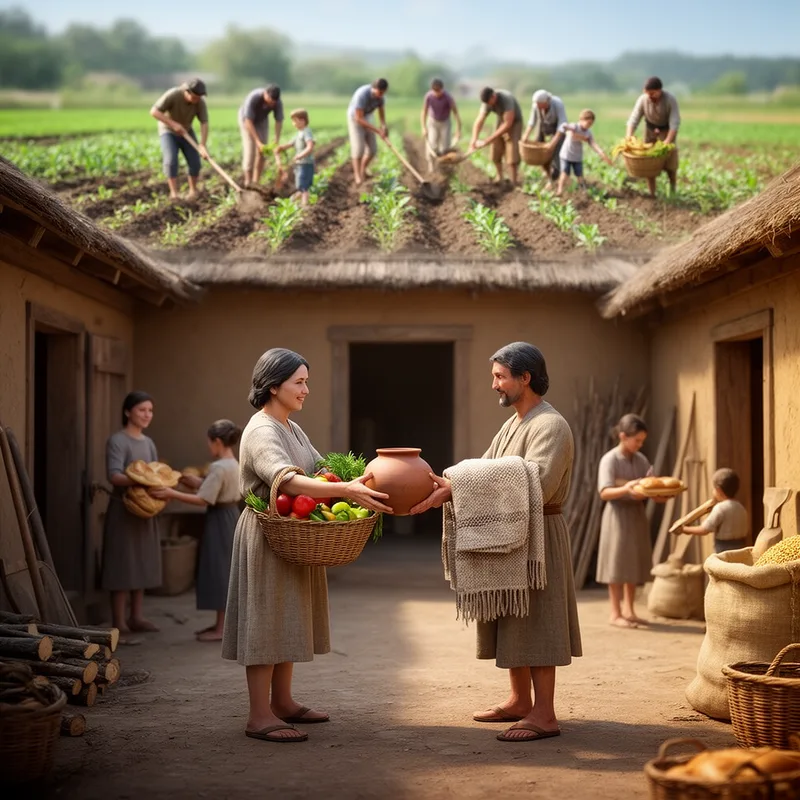
During the precapitalist period, communities relied heavily on barter and cooperation rather than monetary transactions.
-
The village council made decisions that reflected the customs and needs of their precapitalist way of life.
Surface Forms
Morphology
precapitalist = capitalist (transparent) = pre + capital + ist
The temporal prefix 'pre-' combines straightforwardly with 'capitalist' to mean existing before the capitalist stage or system.
Etymology
Precapitalist breaks into pre- 'before' and capital 'money', as in capitalism. So it describes something that existed before the system where private money and business were the main force.