

prairie sunflower
- noun
- /ˈprɛəri ˈsʌnˌfloʊər/
- US
- The prairie sunflower blooms in late summer across the grasslands of Kansas.
Examples
-
Gardeners appreciate the prairie sunflower for its drought resistance and vibrant yellow petals.
-
Wildlife in the Midwest often feed on the seeds of the prairie sunflower.
-
The prairie sunflower blooms in late summer.
-
Many prairie sunflowers can be found in Kansas.
-
Gardeners appreciate the prairie sunflower for its drought resistance and vibrant yellow petals.
-
The prairie sunflower blooms in late summer across the grasslands of Kansas.
-
Wildlife in the Midwest often feed on the seeds of the prairie sunflower.
Synonyms
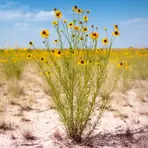
A type of sunflower with thin, branching stems that grows in sandy places in the central United States
Surface Forms
Morphology
The meaning is directly and transparently derived from combining 'prairie' (expansive grassland) with 'sunflower' (a yellow-flowered plant): a B1 learner who knows both words can infer it denotes a sunflower associated with prairie habitats. This is a regular noun–noun compound pattern found across languages and requires no idiomatic knowledge.
Etymology
Prairie sunflower is a simple name that tells you about the plant: prairie means 'grassland' where it grows, and sunflower shows its bright, sun-like flower. So the name points to a sunflower that grows naturally on the prairies of the central United States.

