
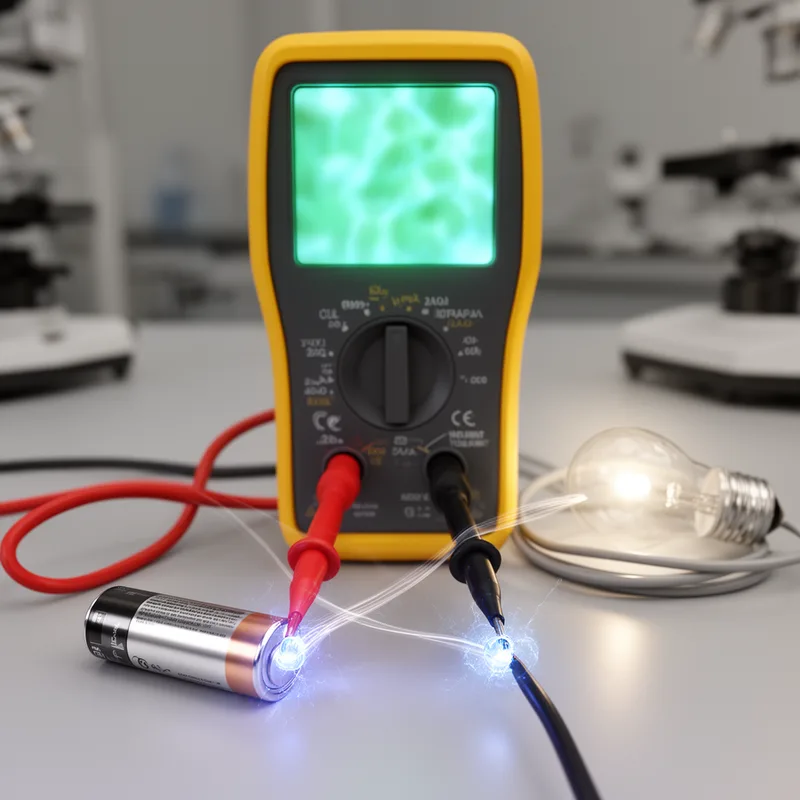
potential unit
- noun
- /pəˈtɛnʃəl ˈjunɪt/
- Specialized
- A one-volt potential unit means one joule of energy per coulomb of charge.
Examples
-
The potential unit used in most electrical calculations is the volt.
-
The potential unit is measured in volts.
-
Engineers measure electric potential differences in potential units to ensure circuit safety.
-
A potential unit indicates the energy per charge.
-
A one-volt potential unit means one joule of energy per coulomb of charge.
-
The potential unit used in most electrical calculations is the volt.
-
Engineers measure electric potential differences in potential units to ensure circuit safety.
Synonyms
 9
6.2
9
6.2

A symbol that shows how many volts electricity has
 4
3.9
4
3.9
One thousandth of a volt used to measure small electrical voltages
 1
5.4
1
5.4
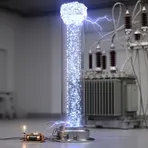
A unit of electric pressure equal to one thousand volts
 1
4.3
1
4.3
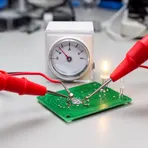
A unit of electric voltage equal to one thousand volts
 1
4.9
1
4.9
A very small electrical voltage equal to one thousandth of a volt
Surface Forms
Morphology
The meaning is directly compositional: 'potential' (electric potential) + 'unit' (a measurement standard) yields 'a unit for measuring electric potential'. This is a regular, domain-specific noun compound common in scientific vocabulary and is predictable for learners who know the constituent senses.
Etymology
The noun potential unit comes from the simple idea of potential as stored 'ability to do work' and unit as a way to measure things. Think of a battery as water behind a dam: a potential unit measures the push each tiny piece of electric charge would get, so it means 'energy per charge' compared with a chosen point.