

potential difference
 1
4.1
1
4.1

- noun
- /pəˈtɛnʃəl ˈdɪfərəns/
- Specialized
- The engineer measured the potential difference in the circuit to ensure it was functioning correctly.
- examine potential difference
- investigate potential differences
Examples
-
When Hertz had performed the experiment, he found no deflection when a potential difference was applied across the two plates.
Academic text (1997) -
Examining potential differences between the groups provided a reference point for the measure.
Academic text (2014) -
His intensity is what we call the potential difference or "voltage".
-
The electron volt is the energy that an electron gains when accelerated by a potential difference of one volt.
Academic text (1990) -
A higher potential difference between two points in a circuit results in greater current flow.
-
You can use a multimeter to determine the potential difference across the battery terminals.
Synonyms
 81
8.1
81
8.1
The electric difference between two points in a circuit that makes current flow
 70
4.0
70
4.0
The electric pressure that makes electricity move between two points
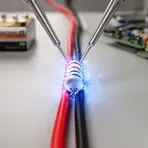
The difference in electric voltage between two points in a circuit
Surface Forms
Morphology
The meaning is directly compositional: it denotes the 'difference' between two 'potentials' (electric potential), so a learner who knows the technical sense of 'potential' and the word 'difference' can derive the MWE meaning. This noun–noun compound follows a regular, cross-linguistically common pattern (e.g. 'diferencia de potencial'), making it transparent to learners familiar with the constituent senses.
Etymology
Potential difference comes from a simple picture: potential is like stored energy and difference is how much more one point has than another. Imagine water high on a hill and low below. The height gap makes water flow, and in an electric circuit the 'difference' gives a 'push' measured in 'volts' that makes 'current' move.