
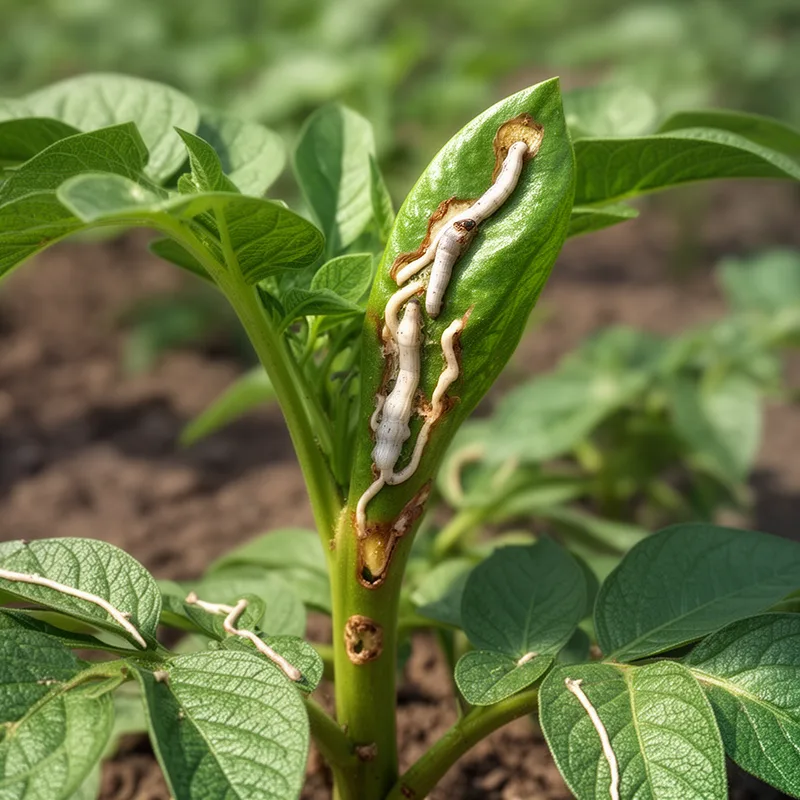
potato tuberworm
- noun
- /pəˈteɪtoʊ ˈtjuːbərwɜrm/
- Specialized
- The potato tuberworm larva can cause significant damage to potato plants by mining their leaves.
Examples
-
The potato tuberworm is a serious pest for potato farmers in many regions worldwide.
-
Damage from the potato tuberworm can significantly reduce crop yields if not controlled effectively.
-
Researchers are developing new methods to manage potato tuberworm infestations without relying on chemical pesticides.
-
The potato tuberworm is a common pest in many gardens.
-
Farmers often struggle with potato tuberworms during the growing season.
-
Farmers are increasingly concerned about infestations of potato tuberworm that threaten their crops.
-
Effective control strategies against the potato tuberworm are essential for maintaining healthy potato yields.
Synonyms


 1
9.9
1
9.9
A grey brown moth whose caterpillars tunnel into and damage potatoes
A small moth whose caterpillars eat and damage potatoes and other plants

A small grey-brown insect whose caterpillars eat and damage potato crops
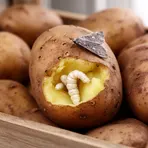
A small greyish-brown moth whose caterpillar eats and damages potatoes
Surface Forms
Morphology
potato + tuberworm
This is a compositional compound: 'potato' modifies 'tuberworm' (it denotes a worm/larva associated with tubers or potatoes). A B1 learner who knows 'potato' and can parse 'tuber' + 'worm' can infer it refers to an insect larva that attacks potato tubers, so the meaning is directly derivable from the parts.
Etymology
The noun potato tuberworm comes from the words potato, tuber for the part that grows under the ground, and worm for a young, worm-like insect. One clear image is a 'worm' living in the potato tuber and eating it, so the name today means the insect 'larva' that bores into and damages potato plants.