

potassium cyanide


 1
8.6
1
8.6
- noun
- /pəˈtæsiəm saɪəˈnaɪd/
- Specialized
- It wasn't potassium cyanide because there was no ragged stippling in the red blood cells.
Examples
-
So it seems the, uh, the pills Mr. Vega took were spiked with potassium cyanide. - You know about that? - No.
-
Well, a solution of potassium cyanide, will leave no trace in the blood or organ tissue sample detectable by standard tests.
-
Were there any other doctors who may have disliked him, who could've tainted the pills with the, uh... Potassium cyanide.
-
Are you proposing that the man was poisoned with potassium cyanide then the killer waited 7 hours, stabbed him 18 times and then shot him in the back of the head? - I realise this is highly improbable.
-
The safety data sheet warns that potassium cyanide should be handled with extreme caution due to its lethal properties.
-
In his chemistry experiment, he carefully measured the potassium cyanide needed for the reaction.
-
It is crucial to know that potassium cyanide can be fatal if ingested.
Synonyms
 74
7.9
74
7.9
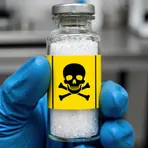
A very poisonous chemical often found as a salt
Surface Forms
Morphology
The term names a chemical compound made of the element 'potassium' and the 'cyanide' group, so its meaning is directly compositional from the constituents. Although technical, the naming pattern for compounds is standard and cross-linguistically common, so a B1 learner who knows both words can reasonably infer it refers to the (highly poisonous) potassium salt of cyanide.
Etymology
Potassium cyanide: The name potassium cyanide comes from two parts: potassium, a metal name taken from old 'pot ash' because potash was an early source, and cyanide, from a Greek word for 'dark blue' after early blue compounds made by chemists. So the name simply shows its chemical parts, and the substance is a very poisonous salt used in some industries.