
potassium chlorate
 1
6.8
1
6.8

- noun
- /pəˈtæsiəm ˈklɔːreɪt/
- Specialized
- In chemistry class, we learned how potassium chlorate can be used as a strong disinfectant in cleaning solutions.
Loading YouTube…
Watch on YouTubeSo I found some potassium hypophosphite and potassium chlorate.
- So I found some potassium hypophosphite and potassium chlorate.
Examples
-
Now, to make our bang, we need potassium chlorate.
-
Sugar, plus potassium chlorate, yields...
-
So what we're going to do is we're going to mix in our potassium chlorate now with the sugar and then I'm going to put it into my Crucible.
-
And in fact, Unabombers early bombs had some of these combinations like potassium chlorate and sodium chlorate and things like that.
-
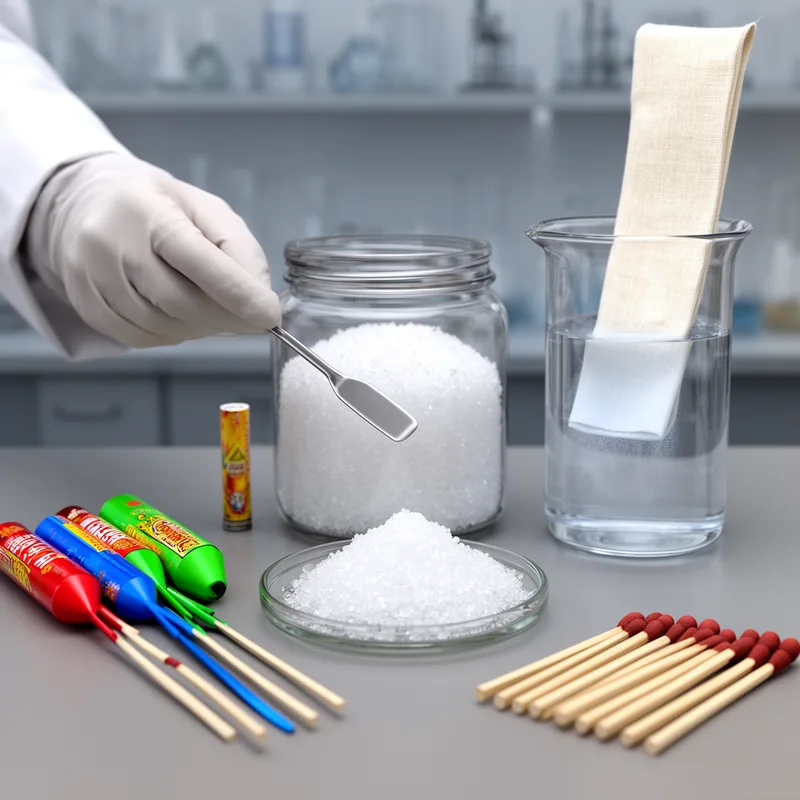
You've got an o xidizer, which is usually potassium chlorate, and you've got glass powders, all held together in a binder on the head of the match.
-
Potassium chlorate is a key ingredient in many fireworks, providing the necessary oxidizer for the potassium chlorate reaction.
-
When preparing the special mixture for the rockets, we carefully added potassium chlorate to the other chemicals.
Synonyms
 2
9.2
2
9.2
A salt made from chloric acid that contains the ClO3− ion
Surface Forms
Morphology
The compound name 'potassium chlorate' is directly compositional: it denotes the chlorate salt of potassium (KClO3), so a learner who knows 'potassium' and 'chlorate' can infer it is a chemical salt made from those parts. While the specific physical properties and uses (e.g. white crystalline salt used in fireworks) are specialised, the basic referent is transparently derived from standard chemical naming conventions common across languages.
Etymology
Potassium chlorate is built from two parts. Potassium comes from the old word 'potash', the ashes from plants kept in pots, and chlorate comes from the element name 'chlorine' plus a usual ending for salts, so the name tells you it is a white 'salt' that can give oxygen and 'help burning', which is why it is used in fireworks and matches.