

post-mortem examination
- noun
- /ˈpoʊstˈmɔrtəm ɪɡˈzæməˌneɪʃən/
- Specialized
- The post-mortem examination revealed no evidence of foul play.
Examples
-
A post-mortem examination was ordered to establish the cause of his unexpected death.
-
Doctors performed a post-mortem examination to investigate the effects of the disease.
-
The doctor performed a post-mortem examination to determine the cause of death.
-
Many families request a post-mortem examination after unexpected deaths.
-
The police conducted a post-mortem examination to determine the cause of death.
-
After the autopsy, the doctor provided details from the post-mortem examination to the family.
-
The post-mortem examination revealed crucial information about the disease that led to his death.
Synonyms
 421
5.3
421
5.3

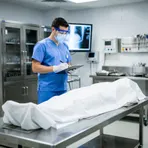
A check of a dead body to find the cause of death
 20
6.8
20
6.8
A medical examination of a dead body to find the cause of death
 3
5.8
3
5.8
A medical examination of a dead body to find how the person died
 2
9.9
2
9.9
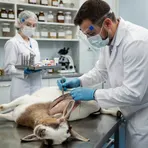
A careful cutting open and check of a dead animal to find cause of death
 2
5.8
2
5.8
A medical check that cuts open a dead body to find the cause of death

An examination of a dead body to find the cause of death
How Thorough
- Specialized
 3
4.2
3
4.2
Surface Forms
Morphology
post-mortem + examination
The compound pairs 'post-mortem' (a Latin-derived term meaning literally 'after death') with 'examination' (detailed inspection), so a learner could infer an 'inspection after an event'. However, the specific figurative shift from autopsy to a retrospective project or incident review is culturally and register-dependent and relies on knowledge of the metaphorical use of 'post-mortem', so the meaning is not fully predictable to a B1 learner.
Etymology
Post-mortem examination uses the parts post-mortem ('after death') and examination ('a careful look'). It creates the image of a doctor looking inside a dead body to 'find the cause' of death, so it means a medical check to discover why someone died.