
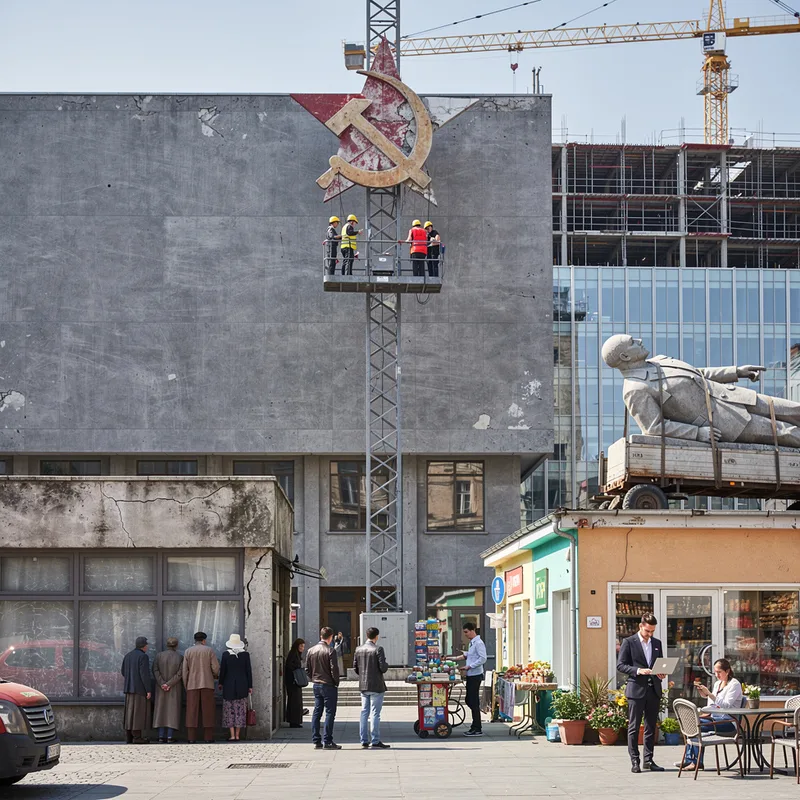
post-communist
 1
6.8
1
6.8

- adjective
- /ˌpoʊstˈkɒmjʊnɪst/
- Here, the state of the post-communist societies provides a useful lesson.
- post-communist countries
- post-communist state
- post-communist society
Loading YouTube…
Watch on YouTubeAnd that asset management company focused on the post communist world, so Russia, the broader CIS, Eastern Europe.
- And that asset management company focused on the post communist world, so Russia, the broader CIS, Eastern Europe.
Examples
-
All of this has been changing during the turbulent post-communist period after 1989.
Academic text (1998) -
Most Western experts assume that citizens of the post-communist world oppose all forms of government intervention in their lives.
Academic text (1995) -
And I myself lived in a post communist country in those days for a long time and was a psychotherapist there.
-
And that asset management company focused on the post communist world, so Russia, the broader CIS, Eastern Europe.
-
The events of the past year painted a depressing picture for most of post-communist Europe.
Academic text (1993) -
The economic situation in post-Communist Russia appears equally grim.
Academic text (1997) -
Frequent references are made to Spain and Portugal as models for post-communist Europe.
Academic text (1998) -
Recent events in the post-communist states of East Central Europe appear to substantiate the truth of this proposition.
Academic text (1992) -
One important characteristic of 1992 was the growing differentiation between the various post-communist countries of Eastern Europe.
Academic text (1993) -
Many citizens in the post-communist nation struggled to adapt to the new market economy.
How Stalinist

Surface Forms
Morphology
Etymology
The word post-communist is made of post- meaning 'after' and communist, which comes from the idea of common meaning 'shared'. Think of postwar to help you remember: post-communist describes a country or time 'after' the end of communist rule.