

positive muon
- noun
- /ˈpɒzɪtɪv ˈmjuːɒn/
- Specialized
- The decay of a positive muon results in the emission of a positron, a neutrino, and an antineutrino.
Examples
-
Scientists track the path of a positive muon using advanced detectors in physics laboratories.
-
A positive muon is produced in some particle accelerator experiments to study fundamental interactions.
-
A positive muon is an antiparticle of a muon.
-
Researchers discovered the properties of the positive muon in 1936.
-
In particle physics, a positive muon decays into a positron, a neutrino, and an antineutrino.
-
During experiments, a positive muon is often generated to help researchers understand particle interactions.
-
A positive muon is a key subatomic particle studied in high-energy physics experiments.
Synonyms
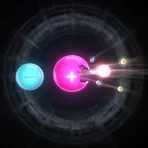
A particle opposite of a muon that decays into a positive electron and light neutral particles
Surface Forms
Morphology
This is a straightforward adjective+noun composition: 'positive' (having a positive electric charge) modifying 'muon' (a type of subatomic particle). A learner who knows both constituent meanings can readily infer that a 'positive muon' is a muon with a positive charge (i.e. the positively charged counterpart), so the meaning is directly compositional and cross-linguistically transparent.
Etymology
Positive muon: The name positive muon comes from muon, a small heavy cousin of the electron, and positive, meaning it carries a plus electric charge. It is the muon's 'opposite' particle with that plus charge, so the name tells you it is the muon with the opposite charge.

