

porta hepatis
- noun
- /ˈpɔːrtə hɪˈpætɪs/
- Specialized
- The surgeon carefully examined the porta hepatis before proceeding with the liver transplant.
Examples
-
Several important structures pass through the porta hepatis, including the hepatic artery and portal vein.
-
Blockage in the porta hepatis can lead to serious complications in liver function.
-
The porta hepatis is crucial for liver function.
-
Surgeons often examine the porta hepatis during procedures.
-
The surgeon carefully examined the porta hepatis during the liver biopsy.
-
The porta hepatis contains important blood vessels and bile ducts essential for liver function.
-
Diseases affecting the porta hepatis can lead to significant complications in liver health.
Synonyms
 10
9.9
10
9.9

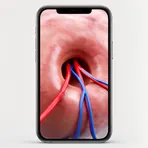
An opening in an organ that lets blood or fluid move in and out
Surface Forms
Morphology
porta + hepatis
The term is compositionally built from 'porta' (an opening or gate) + 'hepatis' (the genitive/root relating to the liver), so its meaning — the opening/gate of the liver where vessels and ducts enter or leave — is directly derivable from the parts. Although the form is Latin and technical, the constituent meanings (porta = opening, hepat-/hepatis = liver) are transparent and cognate with common medical English (hepatic, hepatitis), making the whole predictable to a learner who knows the parts.
Etymology
The name porta hepatis comes from Latin. Porta means 'door' and hepatis means 'of the liver'. It gives the simple image of a 'door' on the liver where the main blood vessels and ducts go in and out, so the name refers to that place.