
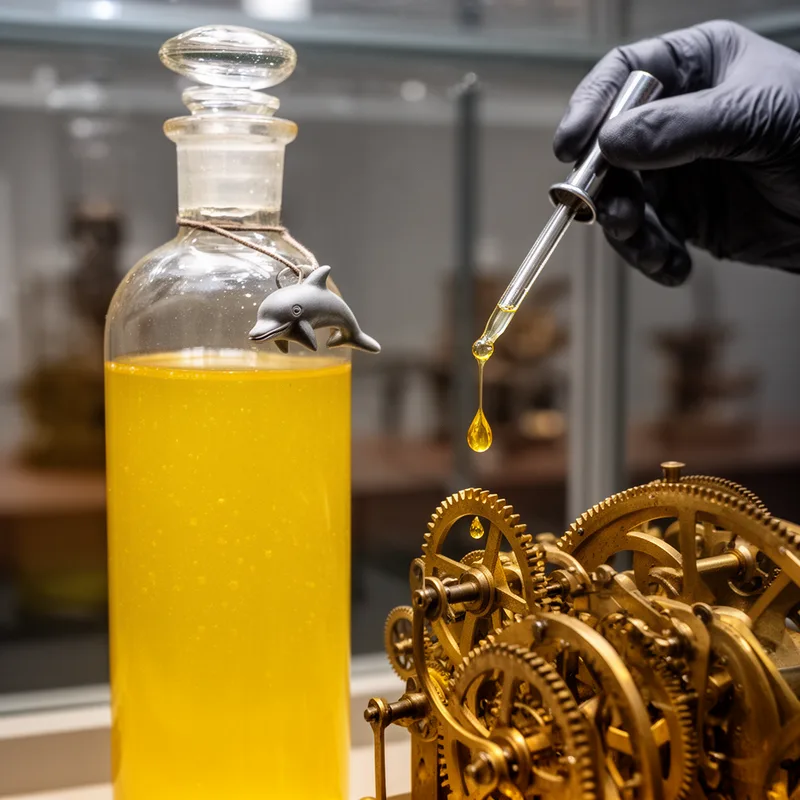
porpoise oil
- noun
- Archaic
- Before synthetic alternatives, porpoise oil was prized for its lubricating qualities in fine machinery.
Examples
-
The museum displayed a container that once held porpoise oil used in old clocks.
-
Restrictions on whaling led to the decline in the use of porpoise oil in industry.
-
The fisherman used porpoise oil for lubrication.
-
Many people are unaware of porpoise oil and its uses.
-
Before synthetic alternatives were developed, porpoise oil was highly valued for its ability to lubricate fine machinery.
-
Due to environmental regulations, the use of porpoise oil in manufacturing declined significantly over the years.
-
In the exhibit, visitors can see a historic bottle that originally contained porpoise oil, which was used for maintaining delicate instruments.
Surface Forms
Morphology
The meaning 'oil obtained from porpoises' is directly and transparently derived from combining 'porpoise' (the animal) with 'oil' (a lubricant/liquid). This noun-compound pattern (e.g. 'whale oil', 'olive oil') is a common and productive construction, so a B1 learner who knows both constituents will readily infer the MWE's meaning despite its rarity.
Etymology
Porpoise oil comes from the fat of the sea mammal, literally porpoise plus oil. This yellow, fatty oil was used to 'grease' fine clocks and machines, so the name came to mean a special 'lubricant'.

