

pore mushroom
- noun
- /pɔr ˈmʌʃrum/
- Specialized
- Experts classify the pore mushroom by examining the tube-like pores on its underside.
Examples
-
Many hikers enjoy searching for pore mushrooms growing on old logs deep in the forest.
-
The thick, woody texture of the pore mushroom makes it easy to identify among other fungi.
-
Look at that giant pore mushroom over there!
-
The pore mushroom is often found in damp forests.
-
Many hikers enjoy searching for pore mushrooms growing on old logs deep in the forest.
-
The thick, woody texture of the pore mushroom makes it easy to identify among other fungi.
-
The pore mushroom is often found in damp forests.
Synonyms


 1
9.9
1
9.9
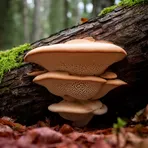
A fungus that grows on wood in flat shelf-like shapes with small holes underneath
 1
9.9
1
9.9
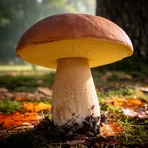
A mushroom with a thick stem and spongy pores under the cap

A kind of mushroom that grows on dead wood and has a pore-covered surface that releases spores
Surface Forms
Morphology
pore + mushroom
The compound is a straightforward noun-noun composition: 'pore' (small openings/tubes) + 'mushroom' yields a mushroom characterized by pores, so the referent is predictable from the constituents. Even though it is a somewhat technical mycological term, the meaning follows normal compounding patterns and is directly derivable by a learner who knows both words.
Etymology
Pore mushroom is named for its look: a mushroom with an underside covered in tiny tube-like holes called pores. That's why the name now refers to the firm, wood-like fungi you can spot by their pore-covered undersides.