
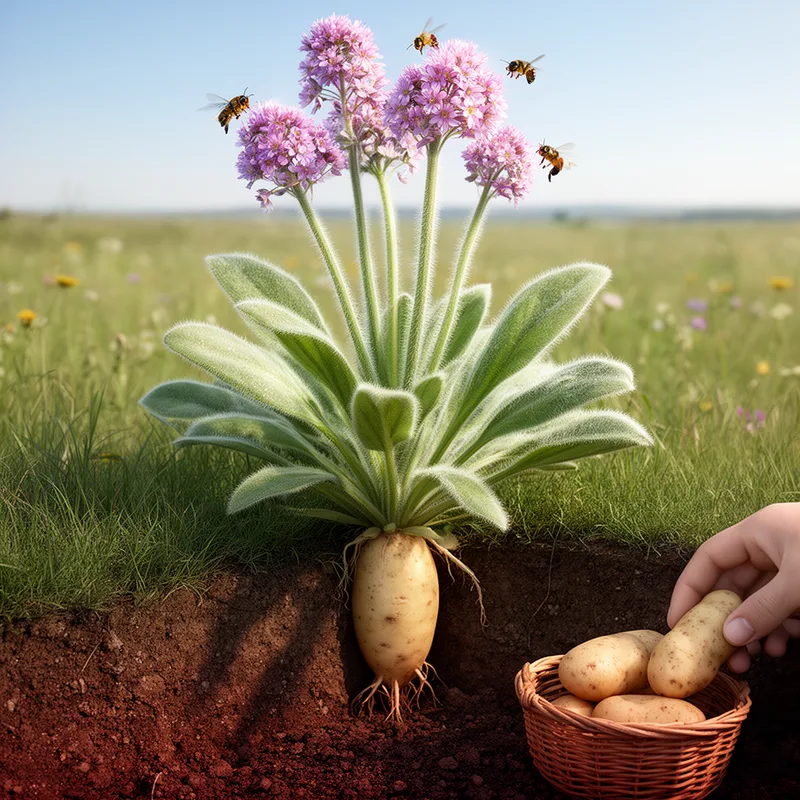
pomme de prairie
- noun
- /ˈpɒm də ˈprɛəri/
- Specialized
- Early Native Americans harvested the pomme de prairie for its nutritious roots.
Examples
-
The pomme de prairie blooms in late spring and attracts many pollinators.
-
Foraging guides sometimes list the pomme de prairie as an important traditional food.
-
The pomme de prairie is a unique plant.
-
Farmers often cultivate pommes de prairie for their roots.
-
Early Native Americans harvested the pomme de prairie for its nutritious roots.
-
Foraging guides sometimes list the pomme de prairie as an important traditional food.
-
Farmers often cultivate pomme de prairie for its edible tuberous roots.
Synonyms
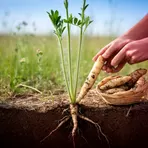
A plant that lives for many years with hairy stems and edible underground roots used for food

A plant from central North America that lives for many years with hairy stems and edible underground roots

A North American plant with hairy stems and roots you can eat like a potato

A plant that comes back every year with hairy leaves and edible underground roots
Surface Forms
Morphology
pomme + de + prairie
Literally reading as 'pomme (apple) de (of) prairie (prairie)', a learner who knows the constituents would infer it denotes an edible plant or 'prairie apple', so some basic sense (a prairie plant with an edible part) is recoverable. However the precise botanical meaning (a perennial with densely hairy appearance and tuberous roots rather than a true apple) and the use of French structure reduce predictability. Because the connection is partially clear but the specific sense is not fully inferable, it is best classified as semi-transparent.
Etymology
Pomme de prairie comes from French and mixes pomme and prairie because the plant's round, edible root looked like a small apple on the open prairie; people called it the 'prairie apple'. So pomme de prairie today refers to the plant known for its tasty tuber.

