
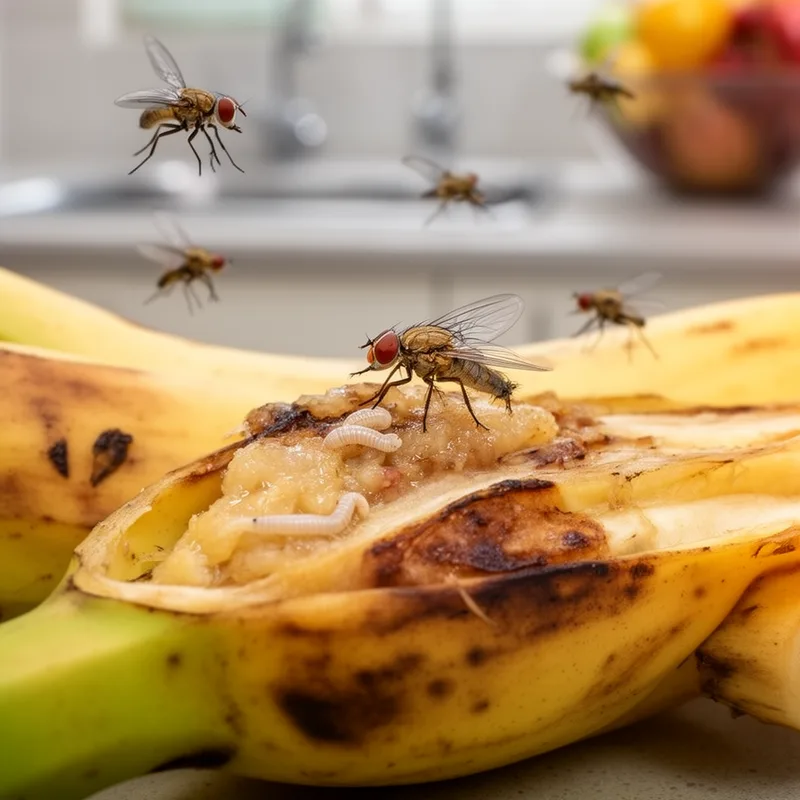
pomace fly
- noun
- /ˈpɒməs flaɪ/
- Specialized
- The pomace fly is often found buzzing around overripe fruit during the summer months.
Examples
-
The pomace fly is a common pest in kitchens where fruit is stored.
-
Cleaning up ripe bananas reduced the number of pomace flies in the house.
-
Researchers studied the genetics of the pomace fly to understand heredity.
-
The pomace fly is often found around rotting fruit.
-
Have you seen a pomace fly in the kitchen?
-
To reduce the infestation, it is important to dispose of any decaying fruit that attracts pomace flies.
-
In warm weather, the presence of pomace flies can indicate that fruit is fermenting nearby.
Synonyms

 14
2.6
14
2.6

A small flying insect whose young eat and spoil ripe or rotten fruit
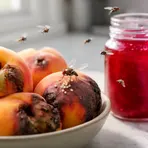
A small fly that lays eggs on rotting fruit or open jars of sweet food
Surface Forms
Morphology
pomace + fly
The noun is compositionally built from 'pomace' (fruit pulp or remains) + 'fly' (an insect), so its meaning — a fly associated with decaying/fermenting fruit — is directly derivable following normal noun+noun compound logic. That said, 'pomace' is a low-frequency, specialized word many B1 learners may not know, so the item is transparent only for learners who already know that constituent.
Etymology
Pomace fly comes from pomace, the soft fruit pieces left after fruit is pressed for juice or wine. Those pieces quickly start to rot and attract tiny flies, so the name became 'a small fly that feeds on rotting fruit'.