

polypropenonitrile
- noun
- /ˌpɒliˌproʊpəˌnoʊˈnaɪtraɪl/
- Specialized
- The crease-resistant property of polypropenonitrile makes it popular in the textile industry.
Examples
-
Many winter garments are made from polypropenonitrile fibers due to their softness and strength.
-
The laboratory developed a new blend using polypropenonitrile for enhanced durability.
-
The fabric is made from polypropenonitrile.
-
Many clothing manufacturers use polypropenonitrile for its durability.
-
Many winter garments are made from polypropenonitrile fibers due to their softness and strength.
-
The crease-resistant property of polypropenonitrile makes it popular in the textile industry.
-
Clothing made with polypropenonitrile is often lightweight and easy to care for.
Synonyms
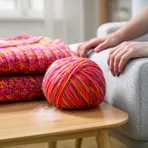


 1
4.6
A warm, soft material made from plastic like wool used for clothes and furniture covers
 1
9.9
A man-made material used to make strong fibers and plastics
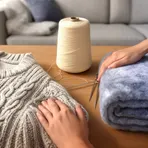
A man-made fiber used to make warm, soft clothes and blankets
Surface Forms
Morphology
polypropenonitrile = propenonitrile (opaque) = poly + propenonitrile
This is straightforward prefixation with poly- meaning 'many' or 'polymer of' attached to the base term propenonitrile.
Etymology
Polypropenonitrile breaks into parts you may know: poly- means 'many' as in polyester, propene is a 'three-carbon' piece like propane, and nitrile points to a 'nitrogen' group. So polypropenonitrile literally means many propene pieces with a nitrile, which helps explain why it forms long, strong synthetic fibers.