
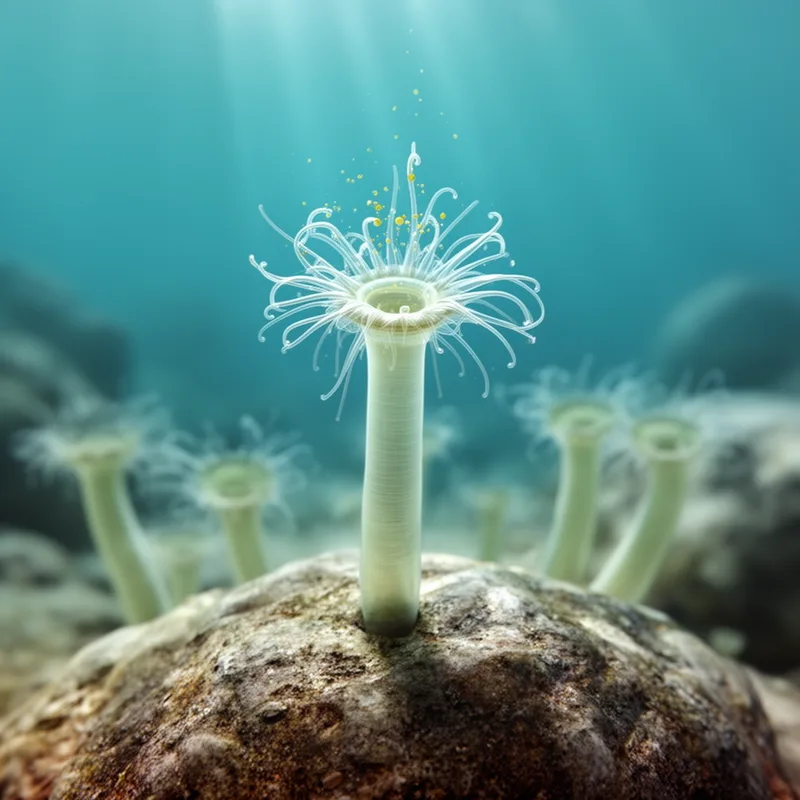
polyp
 3
8.6
3
8.6

- noun
- /ˈpɑːlɪp/
- Specialized
- One polyp fills up with gas to become afloat, enabling the bluebottles to stay close to the surface for feeding.
- coral polyps
Examples
-
Colonies are composed entirely of either male or female polyps.
Academic text (2009) -
Each white cluster is an individual animal, a coral polyp.
Academic text (2009) -
The skeleton of calcium carbonate is produced by individual cnidarian polyps; see photograph above.
Academic text (2009) -
Each polyp is little more than a digestive sac with tentacles that catch plankton and organic particles.
Academic text (2009) -
The tiny bell and tentacles deteriorate and turn into an immature polyp that spawns brand new clones of the parent.
-
This underwater metropolis of life is built upon the smallest and most fragile of organisms - coral polyps, whose skeletons form the reef, creating prime real estate for thousands of species that stretches for miles.
-
The coral reef is formed by thousands of tiny polyps that work together to create a vibrant ecosystem.
-
Each polyp has a mouth surrounded by tentacles that help it capture food in the water.
-
In the warm waters of the ocean, many polyps thrive, contributing to the formation of beautiful coral structures.
Compounds

- Specialized
A small growth of gland tissue in the inner lining of the colon or rectum that can turn into cancer

How Developed

Surface Forms
Etymology
Polyp comes from Greek parts poly- 'many' and pous 'foot', because these animals have many tentacles that look like 'feet', just like the familiar word octopus means 'eight-footed'. So a polyp is a small sea animal that stays attached and uses its tentacles to catch food.