
polymyxin


 1
9.3
- noun
- /ˌpɒlɪˈmɪksɪn/
- Specialized
- In 2001, Morpeth et al. compared topical ciprofloxacin/hydrocortisone drops with neomycin/polymyxin B/hydrocortisone drops.
- polymyxin B and hydrocortisone
- polymyxin B
- polymyxin B drops
Examples
-
The aminoglycoside antibiotics and polymyxin B are devastatingly ototoxic in animals.
Academic text (2004) -
We don't use neomycin/polymyxin B/hydrocortisone much anymore.
Academic text (2002) -
Its antipseudomonal activity is found in the neomycin and polymyxin B components.
Academic text (2002) -
Neomycin/polymyxin B/hydrocortisone otic suspension is one of the more widely prescribed eardrops in the United States.
Academic text (2002) -
Miro conducted a comparison trial of ciprofloxacin and neomycin/polymyxin B/hydrocortisone in 232 patients with CSOM.
Academic text (2005) -
The major components of these products are anti-infectives such as polymyxin B, neomycin, gentamicin, and chloramphenicol in a non-aqueous hygroscopic vehicle, to which a corticosteroid is frequently added.
Academic text (2004) -
A single dose of neomycin/polymyxin B/hydrocortisone into the external auditory canal of a chinchilla passes easily through a tympanostomy tube and produces a significant loss of hair cells in the basal turn of the cochlea.
Academic text (2004) -
When acidic drops—for example, neomycin/polymyxin B/hydrocortisone preparations, whose pH levels range between 3.0 and 3.5 depending on the manufacturer—are placed in the middle ear, they can cause intense burning and pain.
Academic text (2004) -
The doctor prescribed polymyxin to treat the patient's severe bacterial infection.
-
Infections caused by Gram-negative bacteria can be effectively targeted with polymyxin antibiotics.
Surface Forms
Etymology
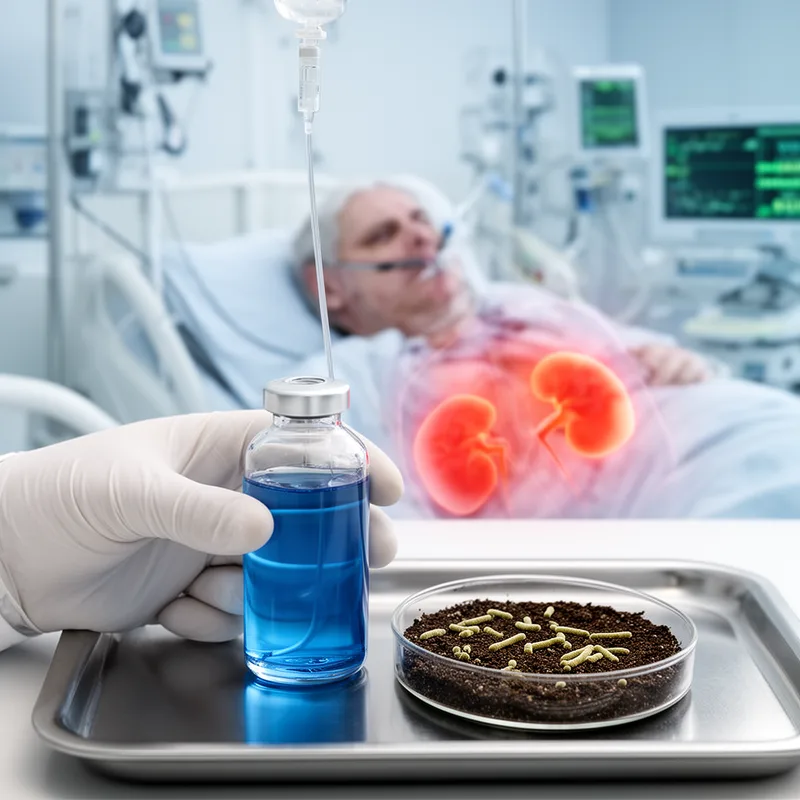
The word polymyxin comes from the Greek parts poly- 'many' and myx- 'mucus', and it was named after the slime-like bacteria that make it. So polymyxin is an antibiotic made by soil bacteria, which helps explain why it is a natural but sometimes toxic medicine used for serious infections.